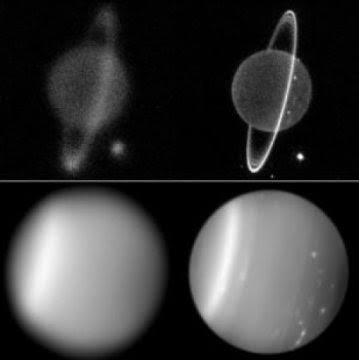
Constructing a larger telescope allows astronomers to observe more light, but light waves can be deformed while traveling through the atmosphere. Adaptive optics are used correct for distortions that would otherwise prevent a telescope from producing a clear image.
## Why Image Quality Can Be Poor
The atmosphere causes distortions in light waves coming from space. This means that a powerful telescope is capable of capturing light from a far away object, but not of producing a crisp image of said object
Adaptive optics are used to detect and correct distortions. The correction has to be made quickly since the atmosphere is constantly changing.
## Constant Correction
The technology is similar to centering a camera while being aware of the fact that the surrounding environment is also changing
Adaptive optics allow the telescope to constantly adjust the image in much the same way. Active optics are another technology that is used for making slow adjustments to the shape of the telescope. The technologies have different applications, but both improve image quality.
The comparison serves as a brief lesson on technological advancements. In order to improve the function of something, you have to determine what it's limitations are. Improving one factor does not necessarily improve another.
## Summary
Adaptive optics allow astronomers to use large telescopes more effectively. Additionally, the technology is an example of how sensors, computers, and specialized machinery can be utilized together to improve an existing technology. Sometimes, a better view is achieved by making sure that the environment isn't warping the image.
Source: European Southern Observatory — What Is Active and Adaptive Optics?