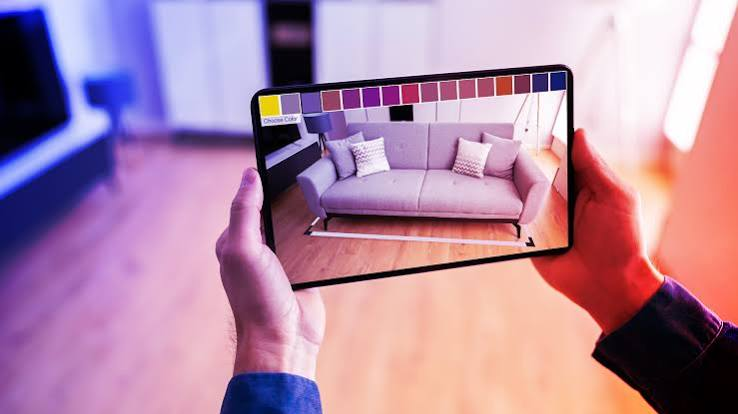
You have your phone out, and instead of a social media app you see a preview of how your new desk would look in an empty room. With this sort of technology you can see the desk in an environment, but the environment stays real. This is the concept of augmented reality, and the value of this is that it can allow people to experience digital information in a real world setting.
What Is Augmented Reality?
The concept of augmented reality, or AR, is "overlaying" digital information onto a person's view of their world. IBM describes this as using "cameras, sensors, and displays" to interpret and present information in a way that mixes reality and digital information. Information from phones, tablets, and glasses can be used as a medium through which a person can see digital information.
While virtual reality typically surrounds the person using it with digital information, the mix of real and digital is what makes up augmented reality.
## Why AR Can Be Useful
IBM has already listed out some examples of augmented reality, such as navigation, furnishing previews, and camera effects. Each of these examples share the trait of using digital information to enhance something in the view of the person.
If there was a classroom application that mixed the text of a work sheet with a rotating model of a molecule, students could see the structure of what they are learning about in a more accessible way. This example highlights a good guideline for developing AR, is the information being overlaid being useful to the person?
The application should be judged in part on how well the information that it presents is.
## The Importance Of Accuracy
IBM notes that a key part of AR is that it tracks position and orrientation, so that information is presented correctly.
When it comes to the display of information, this is a crucial point. If the information is not displayed correctly, it can lead to the person accessing the information misunderstanding what it means. A preview of furnishing in a room that is too small would lead to the customer getting less space than they expected. An incorrect label could leave someone confused about what they are looking at.
Developers should test and analyze the information being presented as closely as the visual aspects of the application.
Conclusion
The concept of AR can be a useful tool for connecting digital information to a real world setting. The most useful examples of the technology are used to enhance the information of an object or location. A realistic display can be great, but if it does not contain dependable and useful information it loses its potential impact.