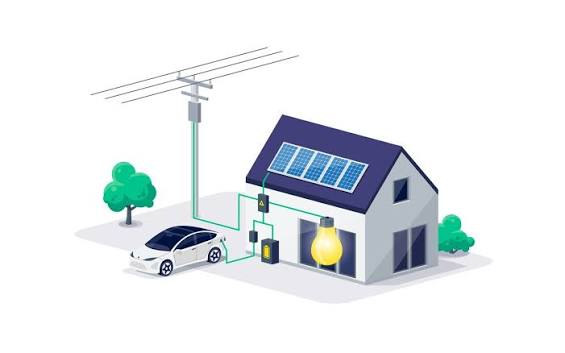
An Electric Vehicle (EV) is usually studied for its mileage, its ability to transport you from one point to another. Bidirectional Charging offers another possible use for an EV. Bidirectional Charging allows an already charged battery to power something outside the vehicle
This innovation creates a new facet to the discussion of power.
## Power Goes Both Ways
Typically, power flows from an outlet, into the car battery
With bidirectional charging, the flow can be reversed. Something outside the EV has the ability to draw power from the vehicle battery.
According to the Department of Energy, this new capability requires an EV that can provide the power, and charging equipment that can receive the power.
The EV battery has a new application: mobile storage.
## Why It Matters
The DOE sees applications for mobile storage in transportation and in the power grid. A system that can store energy has value in both systems
The key issue in both applications is flexibility. A group of fleet vehicles in one location could be considered for a project, according to the DOE. Transportation needs dictate when a vehicle can be used. A schedule for charging and discharging would be crucial to such a project.
Mobility is a component of a vehicle. Using the vehicle as a power source is a different application that requires careful design to accomodate a transportation need and maintain a battery's health.
## Conclusion
Bidirectional charging allows a vehicle battery to have two applications, transportation and storage.
These two needs can be integrated in the right circumstances, with the right equipment, and the right planning.