Brain–Computer Interfaces: Translating Neural Signals into an Output
A brain–computer interface, or BCI, uses measured neural activity to help produce an external result, such as a communication output or a control command. The idea is compelling, but its capabilities are more specific than the broad phrase “reading the mind” suggests.
What the system measures
FDA materials describe neural interfaces that record and interpret signals, including scalp-electrode and implanted approaches. The way signals are obtained affects the information available and the demands of the system. Hardware, signal quality, and decoding software all contribute to the result.
A decoder relates patterns in a recording to a defined task. That task might involve an intended movement or an attempt to communicate. The output is an inference based on measured activity and the system’s design, rather than a direct transcript of every private thought.
A research example in communication
A 2026 Cell Reports study examined intended-speech decoding in a participant with long-standing anarthria and locked-in syndrome. The researchers reported decoding several language-related units above chance, while sentence accuracy remained below results from some other participant settings.
The important lesson is both progress and context. A particular participant’s condition and the task being studied influence performance. A result from one investigation should not be expanded into a claim that every person can use the same system with the same accuracy.
What a useful evaluation asks
Imagine a research team testing a communication interface. It could define what counts as a correct output, how long it takes to produce, and how errors are corrected. It would also measure the user’s effort and whether performance remains dependable over repeated sessions.
This hypothetical example shows why a headline accuracy number is incomplete. A system may produce an occasional convincing output but still require substantial preparation or correction. The meaningful question is whether the complete interaction helps someone accomplish a task.
FDA’s work on clinical outcome assessments emphasizes measuring benefit in ways that reflect how a person functions. Its guidance on implanted BCIs also addresses testing and clinical-study design. Engineering performance and useful daily function need to be connected through appropriate evidence.
Benefits and limits
BCIs offer potential routes for communication and control when ordinary channels are restricted. But sensor reliability, long-term performance, setup, and the handling of unintended outputs remain important. For implanted systems, the physical interface also has to be evaluated over time.
Privacy deserves a concrete explanation: what data is recorded, how it is retained, and which outputs are shared? Clear answers help users understand the system’s actual operation without exaggerating what the neural recording can reveal.
Summary
Brain–computer interfaces translate task-related neural measurements into external outputs. Their promise depends on useful, dependable interaction. Careful evaluation should connect decoding performance with the user’s goals, the system’s operating demands, and evidence from the specific population being studied.
Works Cited
U.S. Food and Drug Administration. “Regulatory Science for Neurological Devices.” n.d. Accessed 10 Oct. 2026.
Cell Reports. “Decoding Intended Speech with an Intracortical Brain-Computer Interface in a Person with Long-Standing Anarthria and Locked-In Syndrome.” 30 Mar. 2026. Accessed 10 Oct. 2026.
U.S. Food and Drug Administration. “Developing Implanted Brain-Computer Interface Clinical Outcome Assessments to Demonstrate Benefit.” 19–20 Sept. 2024. Accessed 10 Oct. 2026.
U.S. Food and Drug Administration. “Implanted Brain-Computer Interface Devices for Patients with Paralysis or Amputation: Non-clinical Testing and Clinical Considerations.” May 2021. Accessed 10 Oct. 2026.
Mike Cai Chen. “Photograph-by-mikeCaiChen.” Wikimedia Commons, 5 July 2021. Image. CC0. Accessed 10 Oct. 2026.
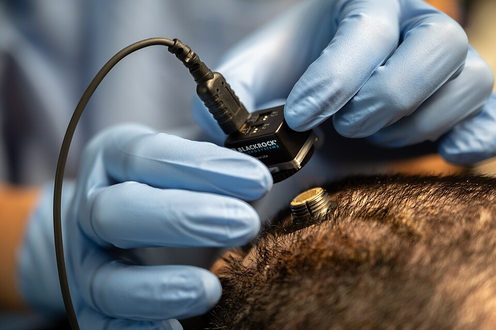
Preparation for an experimental brain–computer interface connection. Image: Mike Cai Chen; CC0.