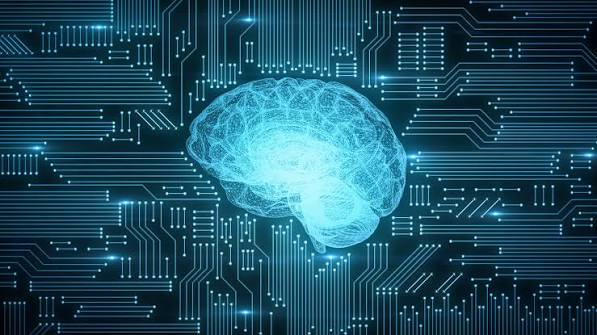
When it comes to improving computers, the first ideas that come to mind are faster processors or more memory. But could there also be something intrinsic in the organization of the machine itself? The area of brain-inspired computing seeks to develop designs inspired by biological organisms with the purpose of facilitating certain calculations.
Introduction
What is brain-inspired computing? The field is sometimes called neuromorphic and involves exploring multiple ways of borrowing concepts from the brain in order to develop new designs for chips. According to IBM Research , the field involves a variety of approaches, and scientists have yet to decide on a specific direction.
Some studies focus on neurons and their role in thinking, while others try to combine memory and processors. The term brain-inspired does not necessarily imply that the chip is modeled after the human brain or even that such a device would have human consciousness.
Trade-offs In Moving Information Around A Computer
A computer normally stores information in memory banks and processes data with a separate set of circuits. According to IBM Research , the constant transfer of information between these two units results in delays and consumes energy. This is particularly true for modern computers that deal with artificial intelligence and require an incredible amount of data to perform calculations.
Let’s imagine asking a student to carry out calculations in another room and report the results. Speed would undoubtedly matter, but the distance itself would play a determining factor.
By analogy, reducing the distance over which data must travel in a computer could reduce delays. It is therefore not surprising that scientists are looking into completely different architectures in which memory and processors are located closer to each other, or even integrated into the same unit.
IBM Research lists several approaches currently under investigation. Among these are analog devices and a specific architecture that brings memory and circuits together. These projects seek to take advantage of fundamentally different designs for the types of calculations required by artificial intelligence.
The variety of options indicates that scientists are still considering the field and looking for the most promising directions. It is important to consider the effectiveness of each architecture in terms of applications, performance, precision, and resources.
Final thoughts
Brain-inspired computing is an interesting field that goes beyond simply making processors faster. This approach is an invitation to rethink the way computers are organized in order to accelerate certain operations. However, the effectiveness of such technology will ultimately depend on its ability to be integrated into functional devices.