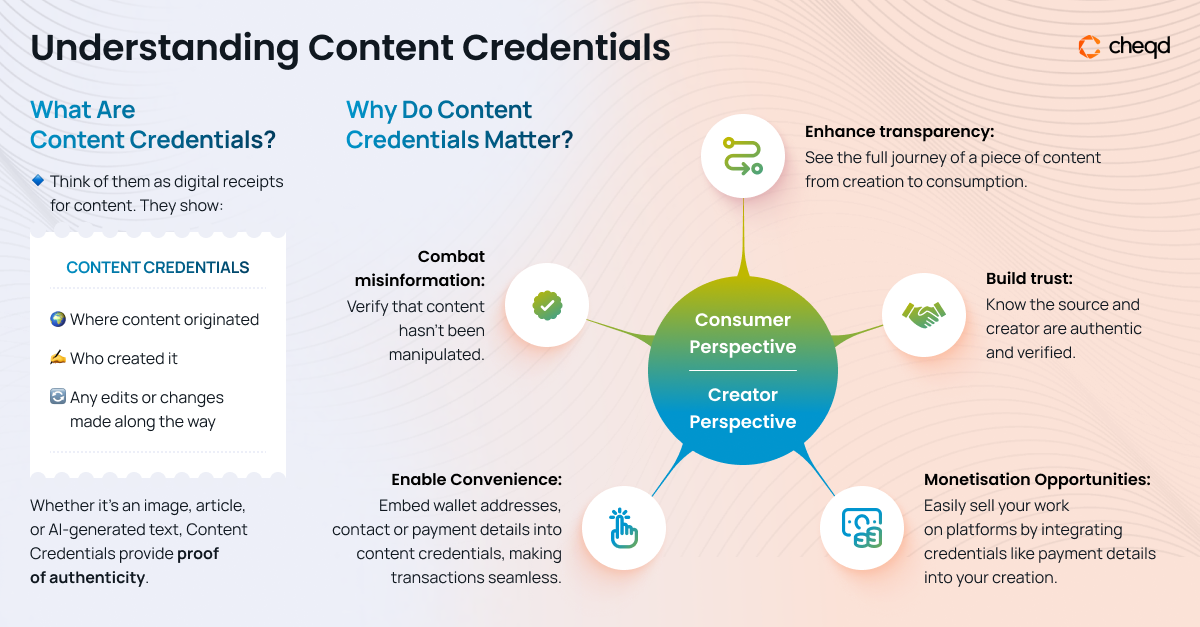
When a striking image appears in a website, the image itself may not tell us much about who created it or its history. Who created this image? Was it edited after they made it? Was it created by an artificial intelligence system? Content Credentials gives us information so we can investigate and discover answers to these questions.
The following are some things that may be included in the information for a particular file. Provenance information for media content tracks information about the file's creation, tools used to edit the file, and whether the file was touched by AI systems.
Digital signature technology is used to make sure that the information hasn't been tampered with. Rather than a human telling us what to think about an image, we can look at any information ourselves.
How Would It Help Us?
Let's say a report is created about damage caused by a storm. If a photo is used in the report, its credentials can show the history of said photo, letting an editor decide if it's a trustworthy source for their story before publishing. We can use them with watermarking and digital fingerprinting as ways to link media with information about them.
However, having a provenance does not mean we can understand everything about a story automatically. A photo with a traceable history could appear with a caption that makes up information about where or when the photo was taken. We still need to examine the claims made around a story, and who we're trusting to report these things to us, if we want to research a story.
Content Credentials can help us research stories by letting us find media with traceable histories. Their importance comes from being able to give people the information needed to ask more questions. Their usefulness may be seen more in the future, since new digital technology makes media content more common and complex to create.