Deep-Sea Nodule Mining: The Machinery and the Environmental Questions
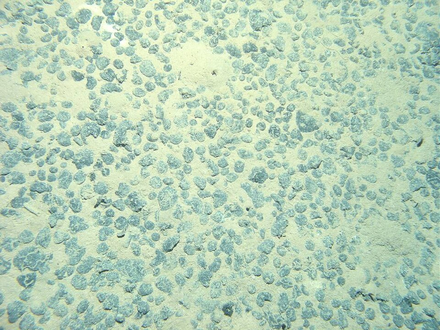
Some deep-ocean areas contain mineral-rich nodules resting on or near the seabed. Collecting them requires machinery that works far below the surface and a system for bringing material upward. The technical challenge is closely connected with the environmental effects of disturbing that setting.
What a nodule collection system involves
NOAA’s accounts of seabed exploration describe nodules as potential mineral resources and document sampling of the environments where they occur. A scientific sample, however, is different from a continuous extraction operation. The scale and purpose of the equipment matter.
A nodule-mining concept can combine a seabed collector, a lifting or riser arrangement, and surface handling. An ISA-hosted technical report discusses how the collector and support ship influence riser selection, including the need to manage movement. These pieces have to work together across a demanding marine environment.
A test is not a complete mining operation
An environmental assessment hosted by the International Seabed Authority describes a pre-prototype collector test without a riser and without transporting nodules to the surface. That distinction is important. A successful collection trial would not by itself establish the performance of a complete collection-and-lifting system.
Imagine a research team evaluating a proposed trial. It would need to state which components are being tested, how long the equipment operates, what material is moved, and which failure or maintenance events occur. This hypothetical evaluation would keep the scope of the evidence clear.
Sediment and habitat disturbance
The cited assessment identifies direct seabed effects such as nodule removal and compaction, together with an operational sediment plume. Disturbed material can move beyond the collector’s immediate path. Monitoring therefore needs to consider more than the visible tracks left by the vehicle.
NOAA’s investigation of a historic equipment test site on the Blake Plateau collected information to examine impacts and signs of ecosystem recovery. This kind of follow-up is valuable because immediate observations cannot answer every question about lasting change.
What a credible assessment needs
An evaluation should establish an environmental baseline before disturbance, monitor the trial, and examine effects afterward. It should distinguish measured changes from model predictions and describe uncertainty. The equipment’s productivity and the environment’s response are related questions, but neither can stand in for the other.
Any mineral-supply claim also needs a complete process comparison. Collecting material does not finish processing it into usable products. Surface handling, transport, processing, energy inputs, and residual materials belong in the wider assessment.
Summary
Deep-sea nodule mining requires an integrated collector, lifting system, and surface operation. Its engineering feasibility cannot be separated from evidence about seabed and sediment disturbance. Careful reporting distinguishes sampling, component trials, and full operations while examining environmental effects over appropriate time periods.
Works Cited
Chaytor, Jason, et al. NOAA Ocean Exploration. “Searching for Historic Deep-Sea Mining Impacts on the Blake Plateau.” 7 Nov. 2019. Accessed 10 Oct. 2026.
International Seabed Authority. “Polymetallic Nodule Mining Technology: Current Trends and Challenges Ahead.” 2017. Accessed 10 Oct. 2026.
Federal Institute for Geosciences and Natural Resources. “Environmental Impact Assessment for the Testing of a Pre-Prototype Manganese Nodule Collector Vehicle in the Eastern German License Area.” 2018. Accessed 10 Oct. 2026.
NOAA Ocean Exploration. “Investigation of a Historic Seabed Mining Equipment Test Site on the Blake Plateau.” 2022. Accessed 10 Oct. 2026.
Abramax. “Konkrecje na dnie oceanu.” Wikimedia Commons, 3 July 2009. Image. CC BY-SA 3.0. Accessed 10 Oct. 2026.
Manganese nodules on the ocean floor. Image: Abramax; CC BY-SA 3.0.