Imagine a situation where you receive a call from a familiar voice saying that they are in trouble and need money. It would be hard to ignore such a request because almost everyone would assume that a familiar voice on the phone belongs to a real person. However, someone could use artificial intelligence to create a fake audio message. This issue is one of the reasons why people and businesses must be aware of deepfakes.
What Are Deepfakes
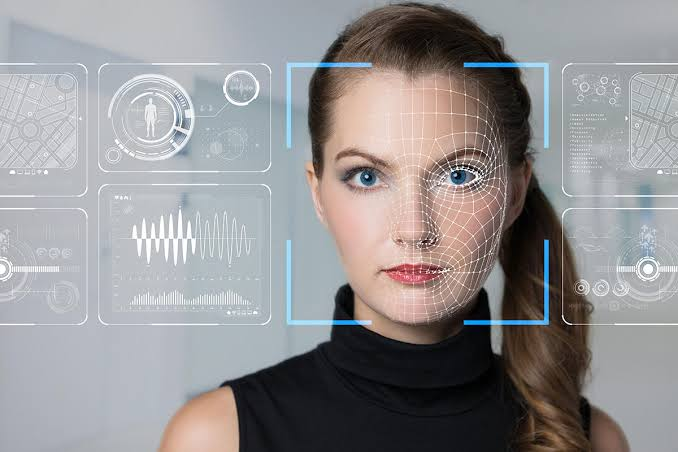
Deepfakes are images or videos created or edited with the help of artificial intelligence. This technology allows one to imitate other people with relative ease. Such content, according to cybersecurity experts at the federal level, is dangerous and should be taken seriously by businesses.
One of the examples of deepfakes, which was mentioned by the Federal Trade Commission, is voice cloning. According to FTC, fake voices often appear when someone’s voice is used to record a short phrase that can be incorporated into a message. This way, one will not be able to rely only on hearing a familiar voice when someone asks for financial help.
What Are the Consequences of Deepfakes
Even though it was easy to guess the intent behind the story about an emergency, the consequences of deepfakes go far beyond scams. One of the reasons for this is that people often operate under the assumption that if something looks real, it is real. However, both emergencies and scandals rely on manipulation and take advantage of the first impression. It is not possible to stop such content from going viral after it has already appeared on social media.
This situation can have serious consequences, such as those related to the example of a fake message from the principal to cancel classes. Although the school administration would ask to double-check the information, some people might share this message because it seems credible. In addition, once false information has already been shared, it may be challenging to retract it and explain that it was misleading. Beyond fake emergencies and scandals, deepfakes erode trust in a general sense. If every other piece of information seems suspicious, it becomes impossible to distinguish real emergencies.
What Can We Do About It
When it comes to advice about calls from relatives in trouble, the FTC advises double-checking the number if it is available. If someone does not answer the call, it is possible to contact another family member or a friend. The same advice applies to situations where someone asks
for money or provides information that seems suspicious. In addition, the FTC notes that gift cards, cryptocurrency, or bank transfers are rarely used by real people to ask for donations.
The same advice can be applied to checking out information from social media before sharing it. In addition to looking for information about the source of a particular story, one should ask more questions. If there are no answers that support the information’s credibility, it is better not to share it.
Summary
Deepfakes challenge the long-held belief that seeing something or hearing something is enough for a person to believe that it is real. The response to the problem of deepfakes requires careful consideration as well as technical expertise. However, even such simple measures as double-checking an unknown number may help avoid falling for a scam. In addition, one must be wary of any information that seems too surprising or requires an immediate answer.
Sources
FTC. “ Scammers Use AI to Enhance Their Family Emergency Schemes.” FTC, 16 Mar. 2023. Web.
CISA. “ NS A, FBI, And CISA Release Cybersecurity Information Sheet on Deepfake Threats .” CISA, 12 Sept. 2023. Web.