Electrochromic Windows: Changing Tint to Manage Daylight
A window can provide a pleasant view in the morning and uncomfortable glare in the afternoon. Electrochromic glazing lets a building change how much light passes through the glass. It brings the window itself into the process of controlling the indoor environment.
What makes the glass change?
Lawrence Berkeley National Laboratory explains that electrochromic windows change tint when a small voltage is applied. Their optical state can be adjusted manually or automatically. The control decision can consider daylight, glare, solar heat gain, and the needs of occupants.
Berkeley Lab’s materials page describes layered thin-film devices and notes that some electrochromic glazings retain their state after switching. This means their electrical demand is linked to changing the tint rather than necessarily sustaining it continuously. The details depend on the device design.
Tinting changes transmission; it does not make the window into a wall. The useful goal is often to preserve a view while controlling unwanted brightness and solar energy. A building can then coordinate the glass with electric lighting and heating or cooling.
Why controls are central
Berkeley Lab’s research emphasizes integration. If the glass becomes darker while the room’s lights immediately become brighter, some of the potential benefit may be reduced. If it stays clear during severe glare, occupants may avoid the area or use separate shading.
Imagine a west-facing school meeting room. An automatic system could respond to afternoon sunlight, while staff retain a simple way to request a different tint. The project team would want to see how the system behaves during presentations, cloudy days, and ordinary meetings. This is a hypothetical use case, not a claim about a particular school.
What real research shows
A Berkeley Lab pilot retrofit studied automated electrochromic windows, improved frames, and dimmable lighting in a Washington, DC conference room. Occupants could override the automatic tint controls. The researchers examined operation under normal occupied conditions, including the role of those manual choices.
That example matters because a window’s laboratory performance is only part of the story. People use rooms in changing ways, and their preferences may differ. A useful control system should make its behavior understandable and provide appropriate adjustment rather than forcing every activity into one preset.
Benefits and limits
The technology can help manage glare, daylight, and solar heat gain. However, the effect on a whole building depends on window orientation, climate, glazing properties, and the controls around it. Results from one test room should not be converted into a universal savings claim.
For a proposed installation, practical questions include switching behavior, tint uniformity, maintenance, and the balance between energy goals and visual comfort. Comparing electrochromic glazing with other shading options should reflect the actual building and the experiences of its occupants.
Summary
Electrochromic windows make light transmission adjustable. Their value comes from combining responsive glazing with thoughtful controls and occupant needs. A successful system improves the room’s experience while coordinating with the other equipment that manages light and temperature.
Works Cited
Lawrence Berkeley National Laboratory. “Electrochromic Materials.” n.d. Accessed 10 Oct. 2026.
Lee, Eleanor S., et al.. “Advancement of Electrochromic Windows.” Apr. 2006. Accessed 10 Oct. 2026.
Lee, Eleanor S., Erin S. Claybaugh, and Marc LaFrance. “End User Impacts of Automated Electrochromic Windows in a Pilot Retrofit Application.” Apr. 2012. Accessed 10 Oct. 2026.
Atdr gs. “Figure 4 - Glass electrochromic coating.” Wikimedia Commons, 16 August 2014. Image. CC BY-SA 4.0. Accessed 10 Oct. 2026.
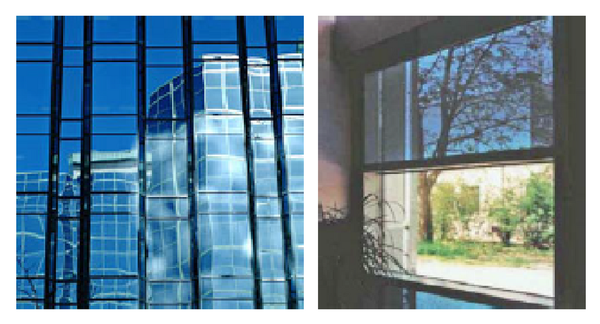
Examples of electrochromic glazing in buildings. Image: Atdr gs; CC BY-SA 4.0.