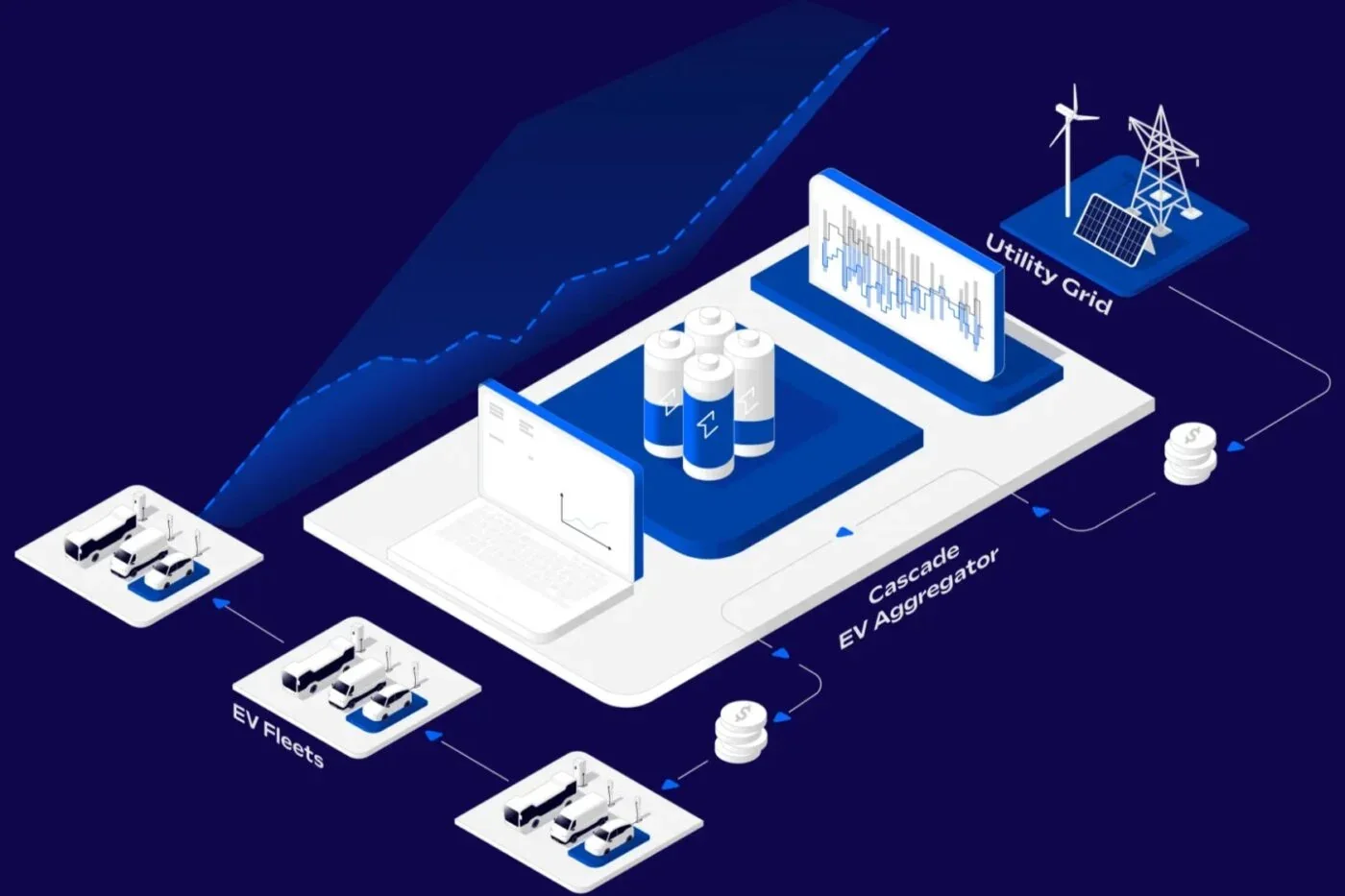
The shift toward decentralized intermittent renewables and electrification has created significant volatility within transmission and distribution networks, with standard centralized power dispatch mechanisms ill-suited to manage sub-second supply-demand imbalances across millions of edge-connected loads.
To manage the risk of grid instability and curtailment of peaker plants, utilities and energy service providers are turning to Everything-to-Grid (E2G) Distributed Asset Aggregation Platforms, which unify flexible behind-the-meter (BTM) and front-of-the-meter (FTM) energy assets (e.g., V2G, residential battery energy storage systems (BESS), heat pumps, industrial HVAC, and grid-interactive data centers) into Virtual Power Plants (VPPs) to provide critical flexibility for the grid.
1. Interoperability Challenges & Heterogeneous Edge Protocol Ingestion
The primary challenge in aggregating distributed energy resources at scale is normalizing heterogeneous data telemetry originating from disparate hardware manufacturers and transport mediums:
Protocol Translation & Hardware Abstraction: Everything-to-Grid (E2G) aggregation platforms ingest asynchronous high-frequency telemetry through a variety of industry standards, including OpenADR 2.0b/3.0 (demand response), IEEE 2030.5 (smart energy profile), OCPP 2.0.1 / ISO 15118-20 (bidirectional EV charging), and Modbus/SunSpec (solar inverters and BESS), which are unified in standardized real-time power state abstraction models.
Latency-Critical Communication Pipelines: Using cloud-edge hybrid messaging protocols like MQTT, WebSockets, and gRPC, E2G platforms enable bidirectional sub-second control loops with millions of edge-endpoints in parallel.
Edge-Driven Autonomy: To avoid instability during network partitions or cloud outages, edge controllers are capable of executing local safety rules, dynamic line rating limits, and local frequency droop response, independent of cloud orchestration.
2. Real-Time Predictive AI & Stochastic Optimization
E2G aggregation platforms employ machine learning model inference and high-dimensional constrained optimization to predict asset availability and compute flexibility margins:
Multi-Variable State Forecasting: Deep neural networks are used to predict asset availability in real-time based on asset-specific utilization patterns, hyper-local weather forecasts, EV traveler departure schedules, and electricity tariff pricing cues.
Constrained Stochastic Optimization: Aggregation engines apply Mixed-Integer Linear Programming and Model Predictive Control algorithms to solve multi-variate optimization problems and compute dispatch schedules for thousands of assets in parallel, subject to hard constraints (e.g., maximum battery degradation rates, battery state of charge guarantees, and indoor thermal limits).
Low-Latency Sub-Second Dispatch: To participate in fast frequency response (FFR) and ancillary services markets, E2G platforms execute automated sub-second dispatch triggers which ramp-up or ramp-down distributed battery behind-the-meter (BTM) and front-of-the-meter (FTM) assets in response to local frequency deviations.
3. Market Participation, Value Stacking, & Settlement Infrastructure
E2G aggregation platforms monetize the value of the aggregated flexibility by programmatically bidding capacity across multiple wholesale energy and local flexibility markets:
Value Stacking Architecture: Aggregation platforms stack revenues across a variety of wholesale market participation programs, including day-ahead energy markets, spinning reserves, frequency regulation, and distribution-level congestion management.
Automated Market Bidding Interfaces: Direct API access to Independent System Operators (ISOs) and Regional Transmission Organizations (RTOs) like CAISO, PJM, ERCOT, and ENTSO-E enable automated bid execution and real-time telemetry confirmation.
Granular Measurement & Settlement: Leveraging sub-meter telemetry, E2G platforms calculate baseline performance and dispatched energy for every asset during market events. Automated billing engines then allocate performance payouts, sharing revenue across all participating assets seamlessly.
4. Cyber-Physical Security & Grid Edge Safeguards
The aggregation of millions of internet-connected grid-interactive devices introduces significant cybersecurity risks, requiring specialized zero-trust security infrastructure:
Zero-Trust Identity & Public Key Infrastructure: All assets, edge gateways, and API endpoints are issued x.509 identity certificates which enforce mutual TLS (mTLS) authentication and end-to-end encrypted control-plane communication.
Adversarial Anomaly Detection: Behavioral monitoring engines analyze dispatch signals and power output telemetry to detect potential adversarial command injection attempts, false fleet-wide sensor reports, and malicious edge gateway takeovers which seek to compromise the integrity of the distribution network.
Physical Guardrails & Inverter Safety Limits: Firmware-level interlocks within power electronics enforce hard voltage, frequency, and current limits, which prevent dangerous distribution transformer loading and reverse power flow events that could damage local distribution infrastructure.
Sources
- electrive. (2026, January 29). Diagram of The Mobility House's Cascade EV Aggregator connecting electric vehicle fleets to the utility grid [Diagram]. electrive. https://www.electrive.com/2026/01/29/the-mobility-house-north-america-reveals-aggregator-for-utilities/