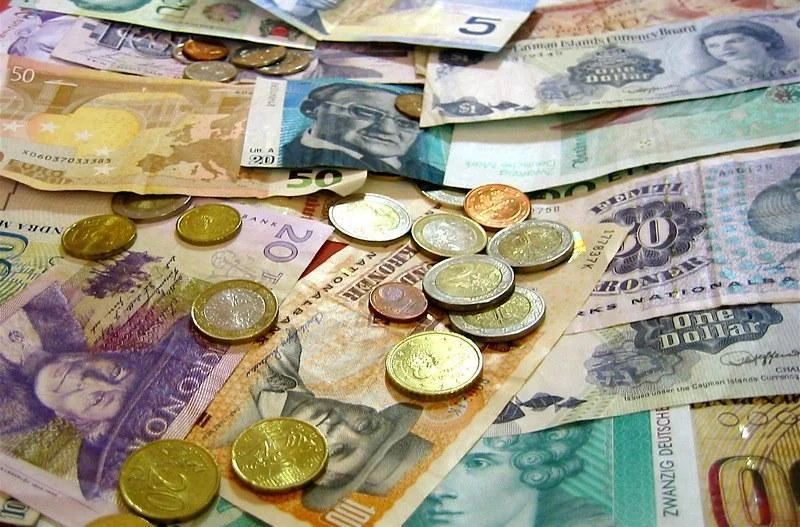
Anyone who has traveled abroad has dealt with exchange rates, usually at an airport counter. For the global economy, they matter far more than vacation budgets. Exchange rates determine what imports cost, how competitive a country’s exports are, and where trillions of dollars of investment flow each day.
What an Exchange Rate Is
An exchange rate is the price of one currency in terms of another. If one euro costs 1.10 U.S. dollars, a product priced at 100 euros costs an American buyer $110. When the dollar buys more foreign currency than before, it is said to have strengthened or appreciated. When it buys less, it has weakened or depreciated. Currencies are traded in the foreign exchange market, the largest financial market in the world, where banks, companies, investors, and governments exchange several trillion dollars’ worth every day.
Floating and Fixed Systems
Most major currencies, including the dollar, euro, yen, and pound, float. Their values are set by supply and demand and change constantly. Other countries fix, or peg, their currency to another one, often the dollar. To hold the peg, the central bank must buy or sell its own currency using reserves of foreign money. A peg gives businesses stability, but it can break. If investors doubt that a country has enough reserves, they sell the currency, and a sudden collapse can follow. Many countries use a managed float, letting the market set the rate while intervening to limit sharp swings.
What Moves Currencies
Interest rates are the strongest short-term influence. When a country’s rates rise, its bonds and savings accounts pay more, which attracts foreign money and pushes the currency up. Inflation works the other way: a currency that loses purchasing power at home tends to lose value abroad. Trade matters as well. A country that exports more than it imports creates steady demand for its currency. Political stability, economic growth, and investor confidence all play a part, and in times of crisis money often flows toward currencies seen as safe, especially the dollar.
Winners and Losers
A strong currency is not simply good, and a weak one is not simply bad. A strong currency makes imports and foreign travel cheaper and helps keep inflation down, but it makes a country’s exports more expensive for foreign buyers. A weak currency does the opposite, helping exporters and tourism while raising the cost of imported goods such as fuel and electronics. For this reason, exchange rates are a frequent source of political tension, with countries sometimes accused of keeping their currencies artificially cheap to boost exports.
Conclusion
Exchange rates link national economies together. They translate prices across borders and respond quickly to changes in interest rates, inflation, trade, and confidence. Even people who never trade currencies feel their effects in the price of gasoline, groceries, and electronics, and in the fortunes of the companies they work for or invest in.