Heat Pumps: Moving Heat to Keep Buildings Comfortable
How can a machine take heat from outdoor air when the weather feels cold? A heat pump uses a powered refrigeration cycle to move thermal energy from one place to another. Understanding that movement explains both its efficiency and the importance of choosing a system for the conditions where it will work.
Moving heat instead of making it
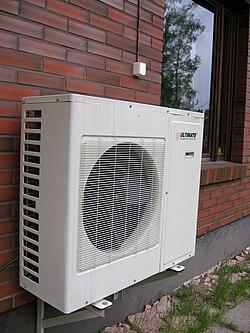
The U.S. Department of Energy compares heat pumps with refrigerators. During heating, an air-source system collects heat outside and delivers it indoors. During cooling, it moves heat out of the building. Other systems use the ground as their heat source or sink, but the central idea is still heat transfer.
The International Energy Agency explains that a compressor circulates refrigerant through a cycle, with heat exchangers collecting and delivering heat. Electricity supplies the work that makes this transfer possible. A heat pump is therefore not getting energy from nowhere: useful heat includes energy moved from the source as well as the energy used to operate the machine.
What efficiency means
The IEA describes the coefficient of performance, or COP, as a way of relating useful heat output to operating energy input. An output greater than the electrical input is possible because much of the heat is transferred from the environment. This is a different process from simply converting electricity into heat in a resistance element.
A single advertised efficiency value should not be mistaken for a promise under every condition. The temperature difference the machine has to overcome, the required indoor heat delivery, and the installation all matter. Comparing systems requires attention to the operating conditions behind the numbers.
A practical example
Imagine a small library assessing a heating replacement. Its staff could begin by documenting occupied hours, room comfort problems, and the building’s heating needs. They could then ask installers how proposed equipment would serve the coldest expected periods and how heat would reach each room.
This hypothetical assessment is broader than choosing a machine from a catalog. A system that produces heat efficiently still needs suitable controls and distribution. The library would also want a clear explanation of any supplementary heating and how operating costs would be estimated using local energy prices.
Benefits and limits
DOE notes that heat pumps can provide both heating and cooling. That can make them useful where a building needs both services. The choice between ducted, ductless, air-source, and ground-source arrangements depends on the building and project.
The technology’s value should be judged at the system level. Equipment capability, the building’s heat losses, installation quality, and the way occupants use the controls all shape results. A careful comparison includes comfort and maintenance as well as energy consumption.
Summary
Heat pumps use work to transfer heat between places. Their efficiency follows from moving thermal energy rather than producing all of it directly. A successful installation connects that principle with the climate, building, and distribution system it is intended to serve.
Works Cited
U.S. Department of Energy. “Heat Pump Systems.” n.d. Accessed 10 Oct. 2026.
International Energy Agency. “How a Heat Pump Works.” n.d. Accessed 10 Oct. 2026.
Ppntori (attributed by Wikimedia Commons). “Outunit of heat pump.jpg.” Wikimedia Commons, 4 June 2006. Image. Public domain. Accessed 10 Oct. 2026.
Outdoor unit of an air-source heat pump. Image: Ppntori (attributed by Wikimedia Commons); Public domain.