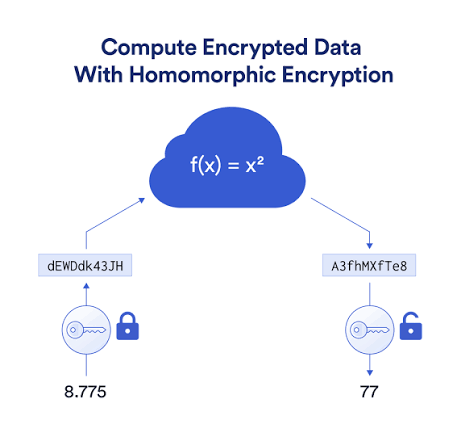
Encryption safeguards information by rendering it unreadable without the proper key. However, many common processes of computing analytics require information to be decrypted beforehand. Homomorphic encryptions offer a different approach: executing calculations upon the information while it remains encrypted.
How Does It Work?
IBM offers that fully homomorphic encryption allows for a computing service to perform the calculation upon the encrypted information, without being able to decipher the information itself. An authorized individual can then decrypt the results of the calculation.
One simple example is the addition of two protected numbers. The service would compute the combination of their encrypted values and provide an encrypted answer. An authorized person with the correct key can then find the sum.
The crucial distinction is the difference between being able to perform a calculation and being able to see the contents of information.
Why This Could Be Useful
IBM names analytics, machine learning, and computation in a third-party cloud as potential applications for the technique. The method can safeguard a confidentiality while another entity performs a computation.
Imagine an organization seeking to have another company analyze some sensitive records. It has a reason to have that company's analysts perform some process on the information while keeping them from being able to peer at the raw information.
The hypothetical scenario is compelling, due to the way that computation is divorced from access to data.
Looking at the Whole System
The protection of inputs is only one aspect of an analytic calculation. The results of the calculation would often contain sensitive information, and the authorized individual or group still has responsibility to protect such information.
As such, organizations should consider the nature of the calculation and the results, as well as who would be entitled to receive the results. Equally importantly, an organization should decide if the system that it chose can perform the necessary calculation in a timely fashion.
A privacy-preserving mechanism is most useful when it has a clearly-defined application where it can protect information.
Conclusion
Encryption that allows for computation broadens the possibilities for performing analytics upon sensitive information. The technique overcomes the assumption that a computing service has to decrypt information before it can perform any calculation upon it. However, the value of such an approach depends on it being paired with the right calculations, reliable implementation, and responsibility taken in protecting the results.