Induction Cooking: Heating the Pan with a Magnetic Field
When a pot warms on an induction cooktop, where does the heat begin? The answer is inside compatible cookware. Instead of first heating a flame or a glowing surface, induction uses an electromagnetic field to make the pan part of the heating process.
How the energy reaches the food
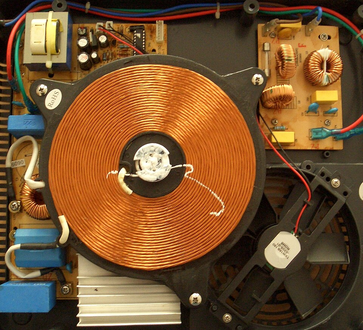
ENERGY STAR explains that an induction cooking surface contains an electromagnetic coil. An electric current creates a magnetic field that interacts with suitable cookware. The cookware heats internally and then transfers that heat to the food.
In DOE’s explanation, conventional burners deliver heat through a flame or a heated element, while induction produces currents in the pan itself. This direct route can reduce the energy lost before it reaches the cooking vessel. The system still uses electricity, and the pan still has to transfer heat into its contents.
Compatible cookware is essential. DOE notes that a flat-bottomed pan to which a magnet sticks is a useful indication of compatibility. This requirement is part of the operating principle, so not every existing pot should be assumed to work equally well.
Why control feels different
DOE describes induction as offering quick heating and responsive control. Changing electrical power changes the energy supplied to the cookware. However, the pan and food retain stored heat, so lowering a setting does not instantly make everything cool.
Imagine a cooking class comparing two methods of warming the same amount of water. The students could record starting temperatures, cookware dimensions, time, and electricity use. Keeping those conditions consistent would make the comparison more meaningful than simply asking which cooktop feels faster. This is a proposed classroom experiment, not a measured performance claim.
The class would also learn why cookware matters. A pan’s shape, material, and contact arrangement influence the cooking experience. The cooktop is only one part of the system being compared.
Efficiency and practical limits
ENERGY STAR’s documentation identifies improved energy transfer as a benefit of induction. Exact savings depend on the comparison and cooking task. Heating a small pot, simmering for a long period, and using several cooking zones can produce different results, so one percentage should not be applied to every meal.
The surface can also become hot from contact with a heated pan. Direct electromagnetic heating does not remove the need to handle hot cookware carefully. DOE describes features such as pan detection, but those features differ by product and do not make hot food or cookware harmless.
For a kitchen project, useful questions include whether existing cookware is compatible, whether the electrical installation suits the appliance, and whether users understand its controls. Those practical issues help determine whether the technological advantage becomes a convenient everyday experience.
Summary
Induction cooking makes compatible cookware the heat source through electromagnetic interaction. It can deliver energy efficiently and offer responsive control. Its benefits depend on the pan, cooking task, and installation, as well as the cooktop itself.
Works Cited
ENERGY STAR. “2021–2022 Residential Induction Cooking Tops.” n.d. Accessed 10 Oct. 2026.
Bui, Vivien. U.S. Department of Energy. “Making the Switch to Induction Stoves or Cooktops.” 11 May 2023. Accessed 10 Oct. 2026.
Wdwd. “Induktionskochfeld Spule.” Wikimedia Commons, 22 March 2008. Image. CC BY-SA 3.0. Accessed 10 Oct. 2026.
The coil and electronics inside an induction cooker. Image: Wdwd; CC BY-SA 3.0.