Laser Welding: Joining Materials with Concentrated Light
Joining metal requires carefully controlled energy. Laser welding supplies that energy with a focused beam of light. The approach can create a narrow weld, but its usefulness depends on how the beam interacts with the material and how well the joint is prepared.
Two ways the weld can form
TWI explains that laser welding can operate in conduction-limited or keyhole modes. In conduction welding, absorbed energy heats the surface and heat spreads into the material. The result is generally a relatively shallow, wide weld.
At higher power density, the material can melt and vaporize, forming a narrow cavity called a keyhole. As the beam moves along the joint, molten material flows around this cavity and then solidifies behind it. This can produce a deeper weld relative to its width.
These are descriptions of the process, not settings for a particular job. Material, thickness, beam characteristics, and the desired joint all influence the appropriate welding procedure.
Why precision matters
A concentrated heat source can be useful because energy is delivered to a limited region. However, the beam still has to reach the correct location, and the adjoining parts have to present a suitable joint. TWI’s work on laser welding in shipbuilding identifies joint fit-up and acceptable weld properties among practical challenges.
Imagine a manufacturer comparing joining methods for a thin enclosure. A laser process might offer a compact seam, but the team would need to test whether the parts can be positioned consistently and whether the seam meets the enclosure’s requirements. This is a hypothetical evaluation rather than a recommendation for a specific product.
The comparison would include production variation. A method that produces a good sample under carefully arranged conditions still needs to work across ordinary batches and tolerances. Fixtures, inspection, and process control become part of the manufacturing system.
A keyhole must remain well behaved
TRUMPF’s technical discussion describes how instability in a keyhole can trap vapor and create pores as molten metal collapses. This helps explain why a narrow weld is not automatically a sound weld. The internal result matters as well as the visible seam.
Quality assessment should therefore match the component’s function. A joint intended to contain fluid has different acceptance questions from one intended mainly to hold a cover in place. The testing method should establish the properties the application actually requires.
Benefits and limits
Laser welding can offer concentrated heating and useful weld geometries. Equipment, alignment, joint preparation, and material behavior all affect the outcome. Its advantages need to be assessed alongside the cost and repeatability of the complete process.
Summary
Laser welding uses focused light to melt and join materials through conduction or keyhole behavior. Its value comes from controlled energy delivery. A successful application also requires consistent positioning, a stable process, and evidence that the finished joint meets its intended purpose.
Works Cited
TWI. “What Is Laser Welding and How Does It Work?.” n.d. Accessed 10 Oct. 2026.
TWI. “A Review of the Development and Application of Laser and Laser-Arc Hybrid Welding in European Shipbuilding.” n.d. Accessed 10 Oct. 2026.
TRUMPF. “LaserCommunity, Issue 35.” n.d. Accessed 10 Oct. 2026.
SKE2025. “Laser welding.” Wikimedia Commons, 7 April 2025. Image. CC BY-SA 4.0. Accessed 10 Oct. 2026.
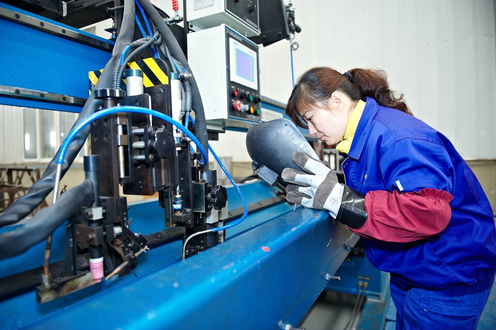
Laser welding equipment in operation. Image: SKE2025; CC BY-SA 4.0.