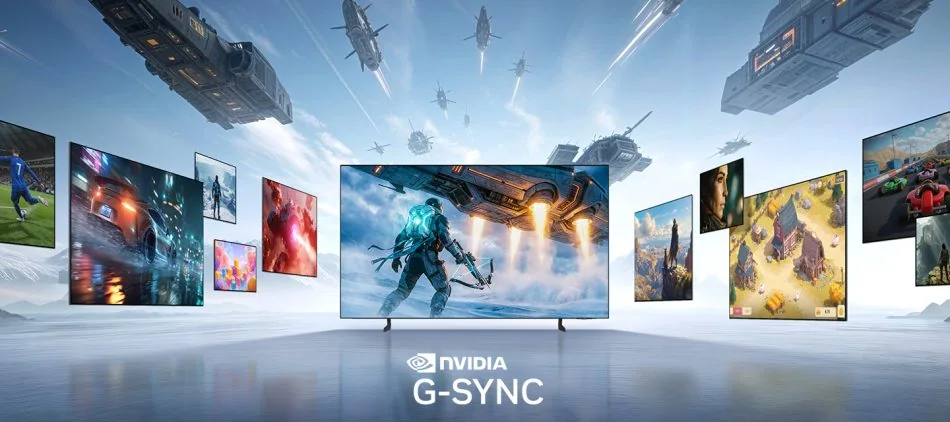
The home entertainment and smart living device space is seeing rapid progress as manufacturers unveil new generation display panels capable of generating extreme contrast and brightness while using less energy, along with late-summer product roadmaps featuring AI-enhanced media platforms.
1. OLED Display Advancements: How Engineers Are Pushing Contrast Ratios To New Heights
For the past decade, engineers working on self-emissive OLED display panels have struggled to simultaneously maximize peak brightness while reducing power consumption and panel heating.
Samsung Display effectively solved the problem through a set of innovative engineering solutions in its latest M16 OLED panel family (part of the company’s LEAD 2.0 program).
Polarizer-Free Design: Engineers managed to increase the amount of light produced by individual OLED stacks by using a second-generation polarizer-free on-cell film (OCF) that incorporates RGB color filters.
30% Power Reduction: Despite the significant increase in peak brightness, the new design reduces overall power consumption by 30% when compared to the M14 OLED panel generation.
Expanded HDR Headroom: The combination of multiple emissive layers and power-saving techniques allowed engineers to squeeze extraordinary levels of peak brightness into displays without exceeding smartphone and television thermal and battery limits.
2. Conversational AI Applications Are Shaping The Future Of Smart Displays
Modern display panels are increasingly used as conversation platforms and smart home management hubs. The industry made a major leap toward this goal in late-summer 2023 through a series of software and hardware announcements.
Home Screen Personalization: New smart displays, including Apple’s upcoming J490 home display device currently in employee testing, use front-facing cameras to scan user appearance and modify displayed information. In practice, it means that different people approaching the same display will see distinct widgets, notes, and schedule reminders.
Conversational AI Experiences: The latest generation smart displays use AI assistants (e.g., Siri in iPhones) to enhance user experience. For example, iOS 27 features generative AI features that allow the Home app to summarize hours of HomeKit Secure Video into single actionable events.
Unified Experience Across Devices: The new devices act as a smart home nerve center by combining the capabilities of televisions, smartphones, and wearable devices. As a result, users can manage an ecosystem of linked devices and applications, including intercom systems and video streaming services.
3. TVs As Decorative Objects: The Art Display Movement Gains Momentum
Modern televisions increasingly blend into home interiors. This trend will accelerate in 2024 as television makers introduce new OLED panels capable of reproducing the appearance of traditional art, and industry veterans promote their existing products as decorative objects.
Samsung Display’s Road Namer: 2026 S95H TV: The 2026 Samsung OLED television lineup will feature a matte black Real Black finish that prevents screen glare and reflections, giving the impression that the artwork or video content is “painted” directly on the panel.
Gallery Mode Experiences: High-end OLED displays will include access to online art galleries, similar to the Samsung Art Store platform. When not displaying video content, such panels will be used to view digital fine art photography and paintings.
Floating Displays And Architectural Mounting: The combination of narrow metal panel bezels and specialized mounting hardware will create the illusion that the television floats inside the home.
Sources
- Samsung Electronics. (2026, February 1). Samsung 2026 OLED TV and gaming monitor lineup featuring NVIDIA G-SYNC Compatibility [Photograph]. Samsung Newsroom US. https://news.samsung.com/us/samsung-2026-oled-tvs-monitors-nvidia-g-sync-compatible-elite-gaming-performance/