Source: https://link.springer.com/article/10.1186/s40359-025-03284-w
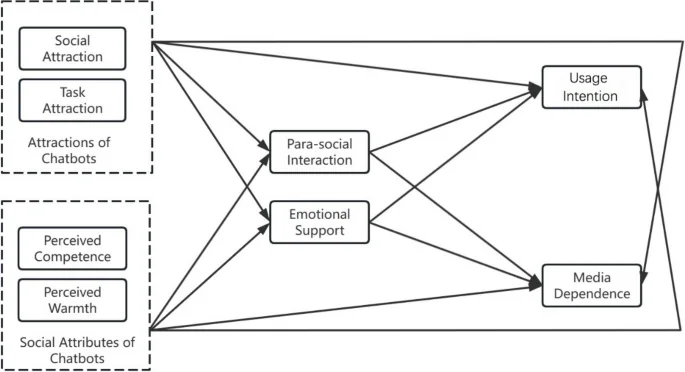
The emergence of highly expressive and contextual artificial intelligence assistants has changed the way humans communicate with computers. As compared to standard digital assistants, such persistent conversational companions utilize advanced language models and memory to converse with the user in a more human-like, lasting, and emotionally supportive manner. However, such a mode of interaction might have certain psychological effects on the user. For example, the user might establish parasocial relationships with the conversational agent and become excessively reliant on the assistant’s guidance. The phenomenon of parasocial relationships and heavy cognitive offloading onto an AI companion might have certain adverse effects on the user in the long run. Persistent conversational AI companions allow the user to engage in parasocial relationships with the machine. Parasocial relationships are unrequited bonds between a person and a fictional or public figure. In the case of conversational agents, such ties might emerge due to the hyper-personalized nature of interactions with each specific user. Since, in dialogues with the AI companion, it always takes the user’s side, supports and encourages him or her, and does not seek to impose its own perspective, the user might mistake the relationship for a symmetric friendship or even a romantic partnership. Moreover, due to the ability of conversational agents to recognize the user’s previous inputs, provide personalized recommendations, and demonstrate empathy, the user might believe that he or she is genuinely interacting with another person. This is facilitated by the fact that many such AI assistants are voice-activated and utilize avatars or other means of visual presentation. Therefore, conversational agents might facilitate the emergence of unhealthy parasocial relationships between the user and the machine. Conversational agents might also lead to excessive cognitive offloading onto the AI companion. Due to its ability to organize and manage the user’s schedule, provide him or her with information retrieval, write documents on command, and give relationship advice, the assistant becomes a heavy crutch for the user. Although delegating routine tasks and decision-making to the AI companion might reduce the user’s cognitive burden and help him or her accomplish tasks faster, excessive reliance on the conversational agent might diminish the user’s ability to handle problems independently. Furthermore, as tasks become too easy, the user loses opportunities to develop his or her resilience and problem-solving abilities. Therefore, cognitive offloading onto the conversational agent might lead to the user becoming overly reliant on the AI assistant’s ability to perform tasks and give advice. The emergence of parasocial relationships and the opportunity to cognitively offload onto the conversational agent might result in certain psychological effects on the user. When faced with social challenges, the user might turn to his or her AI companion exclusively in order to receive unconditional support and guidance. Moreover, the user might become incapable of interacting with other people normally and start avoiding real-life social interactions in favor of engaging with the AI assistant. Such psychological effects might severely impact the user’s well-being when the conversational agent is no longer available. In such a scenario, the user might experience similar emotional discomfort as when losing a close friend or a romantic partner. Therefore, adverse psychological effects of parasocial relationships and heavy cognitive offloading onto the AI companion might severely impact the user in the long run. Conversational agents run the risk of establishing unhealthy parasocial relationships with the user and facilitating his or her cognitive offloading onto the AI companion. Both phenomena might have detrimental psychological effects on the user in the long run. In order to avoid such outcomes, developers should refrain from enabling parasocial relationships by reminding the user that he or she is interacting with an AI. Developers should also promote healthy social interactions by ensuring that the user engages in real-life social activities and has other sources of guidance and support.
Sources
https://www.sciencedirect.com/journal/computers-in-human-behavior https://www.media.mit.edu/publications/chatbot-companionship-loneliness-study/