By: Piya Sadana
When one thinks of artificial intelligence, one might think of the largest and most capable systems. Yet, to use one of the most common applications of AI to perform a simple set of operations, one may not need something as involved as a large language model. Smaller counterparts can do what is needed for a specific task with a lower requirement for processing power.
Small language models are a valid alternative to their larger siblings because their reduced size comes with a reduced set of capabilities that may be better-tailored to a specific task.
Small language models (SLMs) are essentially reduced counterparts of large language models (LLMs). IBM states that SLMs
typically use less memory and computational power, allowing them to be used on mobile devices and other platforms with limited resources.
Some can even work offline when given the right hardware. Their existence is valuable as a tool to fulfill a specific need. A system that only needs to organize texts into categories does not need the same amount of power as one that is designed to answer all questions.
Small language models should be seen as the ideal language model for particular tasks.
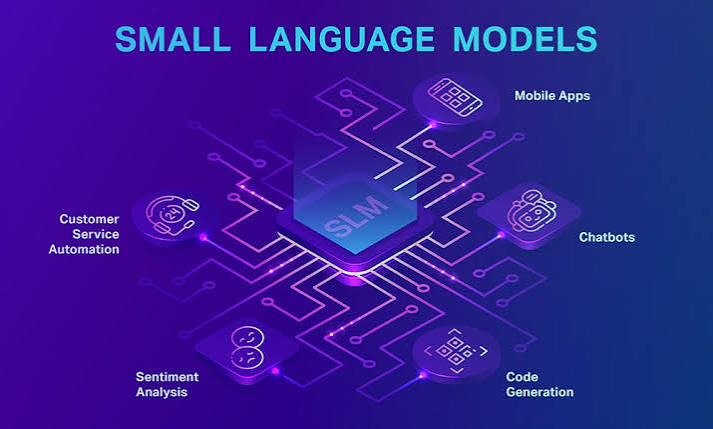
Looking at the example that IBM gives of a school app that sorts messages into categories, its language model does not need to be the biggest available. Developers should look at what their program needs to accomplish and research what kind of language model would serve this purpose best. It is better to pick a small model that will complete its task reliably than to rely on the power of a large one. The passage gives several ideas of possible applications of small language models. IBM cites summarizing, chatbots for customer service, and text generation as some of the common uses for such programs.
The main limitation of small language models is obvious: their capability is lower than that of large ones.
According to IBM, their outputs can contain wrong information, and they may contain unintentional bias.
Their performance is also lower when it comes to complex tasks that require common-sense reasoning. This means that small language models need to be tested for their ability to perform specific tasks, and their use beyond these tasks should be carefully considered.
Small language models introduce a viable alternative to large ones, but one that should be considered on a case-by-case basis. They exemplify the way in which optimization is now a critical consideration in the development of AI systems. Care should be taken when selecting a language model, one that would take into account what this model is capable of and the requirements of the intended task.