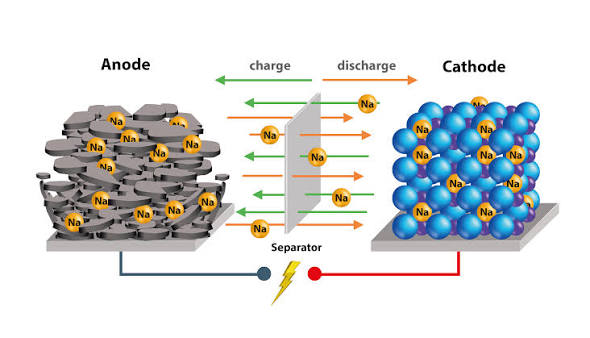
Batteries power our world from our personal transportation to ways communities store electricity. Lithium-ion batteries get the most attention, but researchers are working on batteries that use sodium. But do we really need different batteries for different applications?
How Do They Work
Sodium-ion batteries are similar to lithium-ion batteries, in that they store and release energy made up of positively charged ions. Using sodium instead of lithium can allow for different properties in the resulting battery.
According to the Department of Energy, sodium is plentiful, and sodium-ion batteries do not require the use of other elements like cobalt or nickel. This could lead to a wider variety of materials being used to produce batteries.
Why It Matters
Say you are a community looking to store electricity, so you can use it later in the day. The battery beside your building doesn't have the same constraints as the one in your phone. Therefore, looking at what fits the application is a good way of at least looking at the possibilities. However,