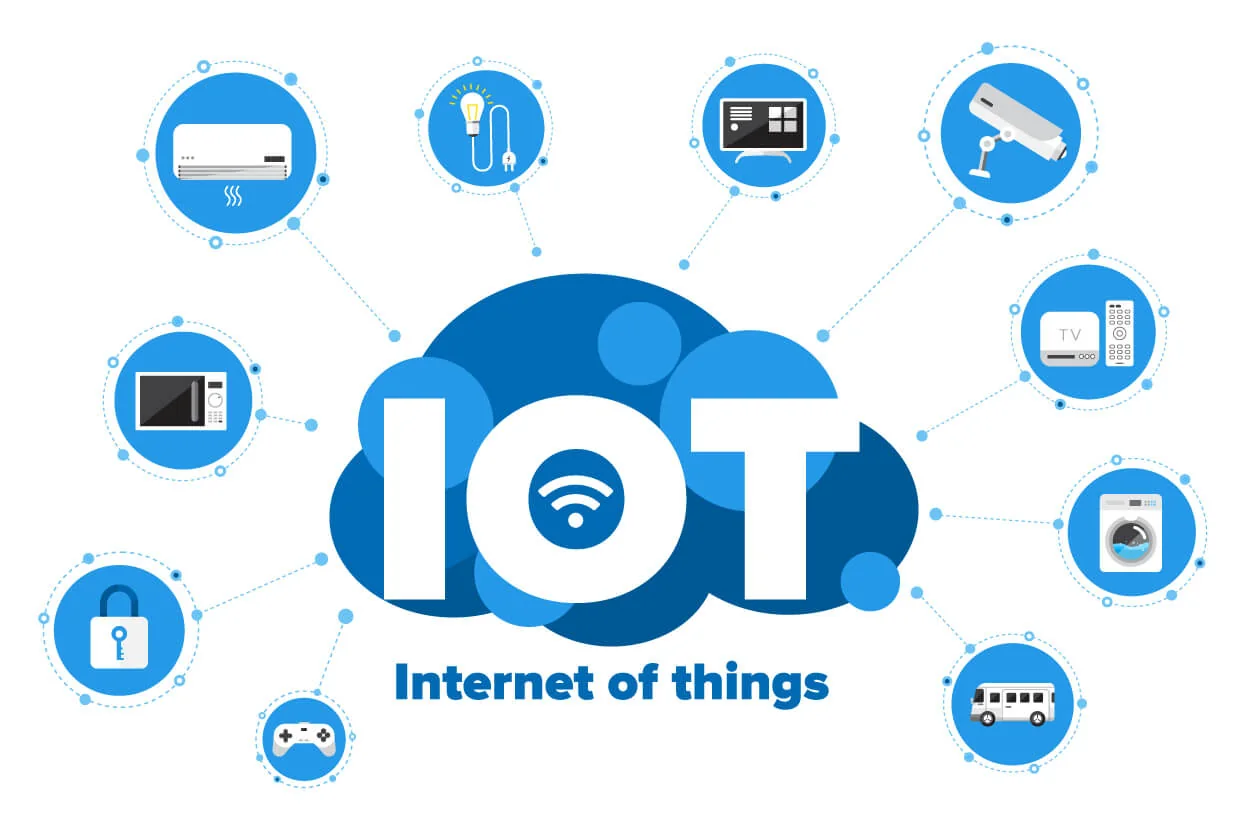
Deploying industrial Internet of Things (IoT) sensor nodes in off-grid, harsh, or hard-to-reach environments presents a severe operational bottleneck: lithium-ion batteries suffer from degradation, thermal sensitivity, and costly manual replacement cycles. While ambient solar harvesting works in unshaded areas, remote industrial monitors inside pipelines, equipment bays, or underground utility vaults require continuous, non-optical powering.
To achieve maintenance-free, batteryless operation, engineering teams are adopting high-efficiency Solid-State Thermoelectric Generators (TEGs) built using nanostructured bismuth telluride (). By harnessing ambient thermal differentials across industrial structural elements, these solid-state energy harvesters convert continuous waste heat into reliable microwatt-to-milliwatt electrical power for low-power edge nodes.
1. The Power & Battery Bottleneck in Remote IoT Deployment
Deploying millions of edge IoT nodes across industrial infrastructure reveals significant limitations regarding chemical energy storage:
High Operational Expenditure (OpEx): Manually replacing depleted batteries in thousands of distributed sensor nodes across pipelines or remote energy grids incurs significant labor and logistical costs.
Extreme Temperature Degradation: Standard chemical batteries experience rapid capacity loss, internal resistance surges, or thermal runaway under industrial conditions ($> 60^\circ\text{C}$) or sub-zero environments ($< -20^\circ\text{C}$).
Intermittent Ambient Energy: Commonly used energy harvesters, such as indoor photovoltaic cells or vibration-based piezoelectric devices, rely strictly on continuous light availability or ongoing mechanical motion.
2. Thermoelectric Generation Using Nanostructured Bismuth Telluride ()
The Seebeck-effect-based conversion of a thermal gradient () into electrical output relies on advanced solid-state TEGs that employ specially engineered materials to maximize power extraction:
Nanostructured Grain Boundary Engineering: Modern TEG modules employ spark plasma sintered (SPS) nanostructured bismuth telluride (). Dense nanoscale grain boundaries scatter heat-transporting phonons without impairing electrical conduction, elevating the figure of merit () to .
Low-Threshold Seebeck Coupling: Optimized semiconductor p-legs and n-legs generate usable voltage output from thermal gradients as small as $\Delta T = 2^\circ\text{C}$ to $5^\circ\text{C}$, enabling steady power generation from warm pipe walls or transformer housing structures.
Solid-State Reliability: Lacking moving parts or fluidic chambers, solid-state TEG modules operate continuously for decades without physical wear or performance degradation.
3. Power Management & Ultra-Low Voltage Boost Circuits
Because minor thermal gradients produce raw electrical voltages below standard semiconductor switching thresholds (often ), the harvesting architecture relies on specialized Power Management Integrated Circuits (PMICs):
Ultra-Low Input Voltage Boost Converters: High-efficiency DC-DC boost converters step up millivolt-level TEG outputs to , matching the standard operating range of low-power edge microcontrollers and sensors.
Pulsed Energy Buffering: Harvesters pair solid-state TEGs with long-life solid-state thin-film capacitors or supercapacitors, storing trickle charge until required for high-peak wireless transmissions (e.g., LoRaWAN, BLE, or NB-IoT).
Maximum Power Point Tracking (MPPT): Dynamic MPPT algorithms continuously match the PMIC’s internal impedance to the temperature-dependent resistance of the TEG, maximizing power extraction across fluctuating thermal environments.
4. Industrial Deployment Roadmap & Batteryless Infrastructure
Integrating solid-state thermal harvesters directly into edge equipment enables self-sustaining industrial sensing networks:
Oil & Gas Pipeline Integrity: Batteryless corrosion sensors mounted along heat-tracing lines or hot fluid conduits harvest continuous operational power directly from pipe surfaces. Electrical substation monitors mounted on busbars similarly convert resistive Joule heating into electricity.
Heavy Machinery & Fleet Telematics: Structural health sensors mounted on industrial gearboxes, pumps, or exhaust manifolds operate indefinitely without battery maintenance, streaming real-time diagnostic data directly to central management networks.
Sources
- GlobalSign. (2026). Diagram of an Internet of Things network showing smart appliances and devices connected to a central IoT cloud hub [Graphic]. https://www.globalsign.com/en/blog/what-internet-things-and-how-does-it-work