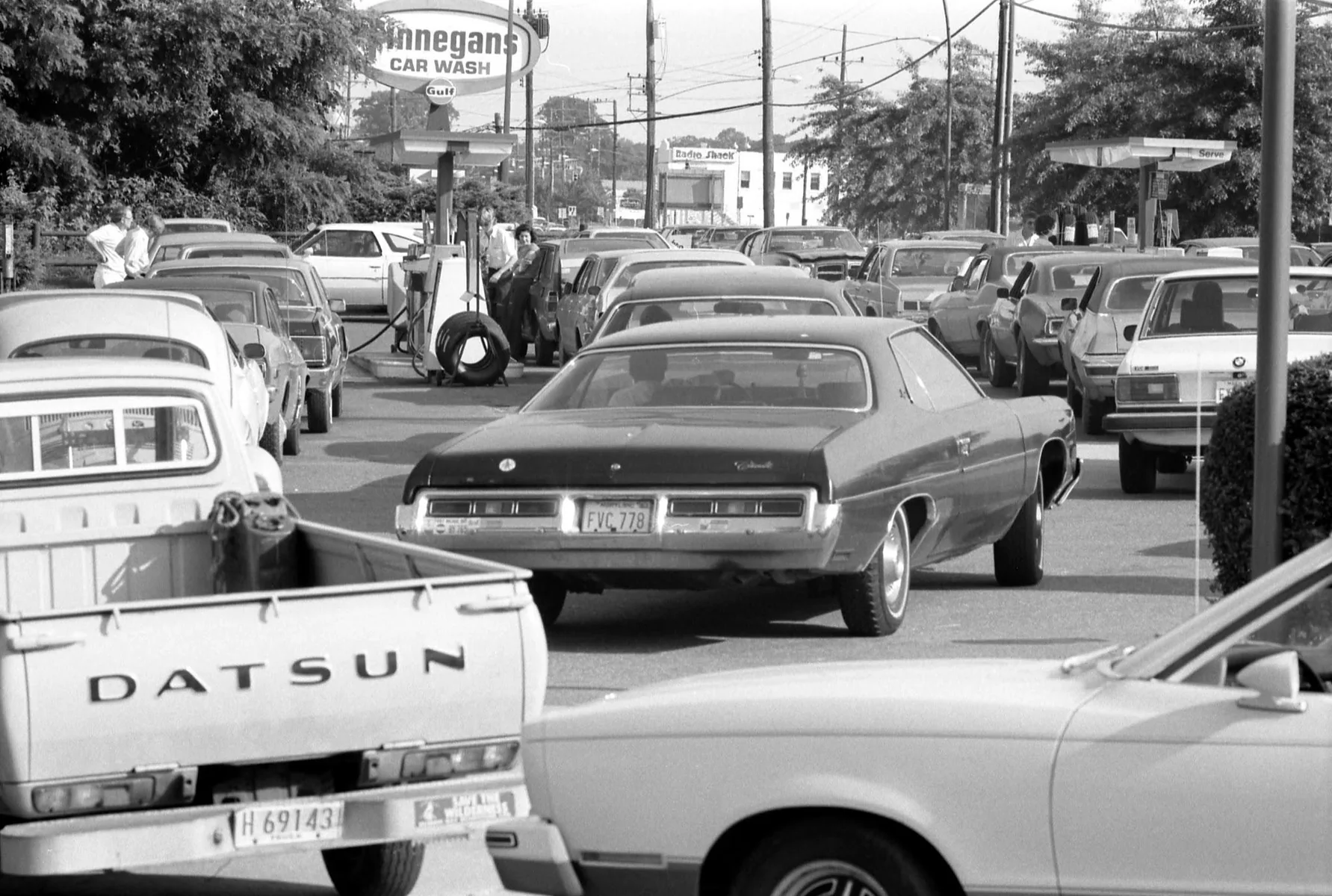
Economies usually face one problem at a time. In a boom, prices rise but jobs are plentiful. In a slump, jobs disappear but prices stay calm. Stagflation is the unpleasant combination of both: a stagnant economy with high unemployment and rapidly rising prices. It is rare, and it is one of the hardest situations for policymakers to fix.
Why It Was Thought Impossible
The word combines stagnation and inflation, and it is generally credited to the British politician Iain Macleod, who used it in 1965. At the time, many economists believed the two could not occur together. The prevailing view held that inflation and unemployment moved in opposite directions, so a government could reduce one by accepting more of the other. Under that view, a weak economy with many people out of work should see little pressure on prices. The 1970s proved otherwise.
The 1970s
In 1973, Arab oil producers cut off shipments to the United States and other countries, and the price of oil roughly quadrupled within months. Because energy is an input to nearly everything, costs rose across the economy. Businesses raised prices and cut production at the same time. A second oil shock followed the Iranian revolution in 1979. The result was a decade of economic pain. Drivers waited in long lines at gas stations, U.S. unemployment climbed to around 9% in 1975, and inflation reached nearly 15% in 1980.
The Policy Dilemma
Stagflation is difficult because the usual remedies work against each other. To fight inflation, a central bank raises interest rates, but that slows the economy and costs more jobs. To fight unemployment, it lowers rates or the government spends more, but that pushes prices even higher. In the United States, the cycle was broken by Federal Reserve Chair Paul Volcker, who pushed interest rates to around 20% in 1981. Inflation fell sharply, but the price was a deep recession in which unemployment rose above 10%.
Could It Return
Stagflation is usually set off by a supply shock, a sudden event that makes goods scarcer and more expensive, such as an energy crisis, a war, or a breakdown in trade. Fears of a repeat surface whenever oil prices spike or supply chains are disrupted. Economists point to differences from the 1970s. Central banks are more independent and more focused on keeping inflation expectations stable, and advanced economies use far less oil per dollar of output than they once did. Those changes lower the risk without removing it.
Conclusion
Stagflation overturned the economic thinking of its time and reshaped how central banks operate. Its main lesson is that inflation, once it becomes expected, is very costly to remove. That memory explains why central bankers today often act against rising prices early, even at the risk of slowing growth. They are trying to avoid a repeat of a decade that many still regard as the worst economic period since the Great Depression.