Superhydrophobic Surfaces: Why Some Droplets Roll Away
A drop of water can spread into a film on one surface and remain almost spherical on another. Superhydrophobic surfaces push this second behavior to an extreme. Their chemistry and fine texture can make water droplets touch very little solid material and move away readily.
Chemistry and texture work together
MIT’s explanation of hydrophobic and hydrophilic materials uses the contact angle to describe how a droplet meets a surface. A larger angle generally indicates that water beads up rather than spreading. Extreme water repellency is associated with particularly large angles and suitable droplet mobility.
Fine texture can amplify the effect of a water-repelling material. Research on textured surfaces describes microscopic air pockets beneath droplets, creating a contact involving solid, water, and air. The resulting behavior depends on whether that arrangement remains stable.
A surface is more than its first photograph
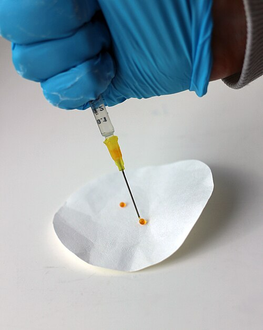
A photograph of a round droplet is useful, but it does not establish how the surface performs during use. A coating might repel a gently placed drop and behave differently when droplets strike forcefully, when water condenses within the texture, or when the surface is submerged.
Research hosted by MIT discusses how trapped air can be lost and how defects or external forces can change the wetting state. Once water penetrates the texture, the desired behavior may weaken. Durability is therefore central to evaluating these surfaces.
An illustrative product test
Imagine a team evaluating a coating for an outdoor equipment cover. It could compare new samples with samples exposed to representative cleaning, dust, and wear. It would record whether water still rolls away, how much remains, and whether the surface changes over repeated use.
This hypothetical test is more informative than a one-time demonstration because it reflects the conditions the product must face. The team would also identify the liquid being tested. Water repellency should not automatically be described as resistance to every oil, solvent, or contaminant.
Why the idea is useful
Controlling how droplets meet a surface can influence the way water is shed or collected. MIT research on liquid-repelling surfaces shows that carefully designed textures can create very different interactions with liquids. The useful design depends on what the surface is supposed to accomplish.
For a proposed product, the questions should stay concrete. Does it need easy drainage, resistance to wetting, or something else? How will it be cleaned? What counts as an acceptable change after use? These requirements connect an interesting material effect to a useful application.
Summary
Superhydrophobic surfaces combine chemistry and texture to make water bead and, in suitable conditions, move away easily. Their practical value depends on maintaining that behavior beyond a clean laboratory sample. A convincing assessment includes durability, realistic liquid contact, and the conditions of the intended use.
Works Cited
MIT News. “Explained: Hydrophobic and Hydrophilic.” 16 July 2013. Accessed 10 Oct. 2026.
MIT Non-Newtonian Fluid Dynamics Research Group. “Robust Omniphobic Surfaces.” n.d. Accessed 10 Oct. 2026.
MIT Varanasi Research Group. “Drag Reduction Using Lubricant-Impregnated Surfaces.” 2014. Accessed 10 Oct. 2026.
UCL MAPS / O. Usher. “Super-hydrophobic coating.” Wikimedia Commons, 5 March 2015. Image. CC BY 2.0. Accessed 10 Oct. 2026.
Dyed water on superhydrophobic coated filter paper. Image: UCL MAPS / O. Usher; CC BY 2.0.