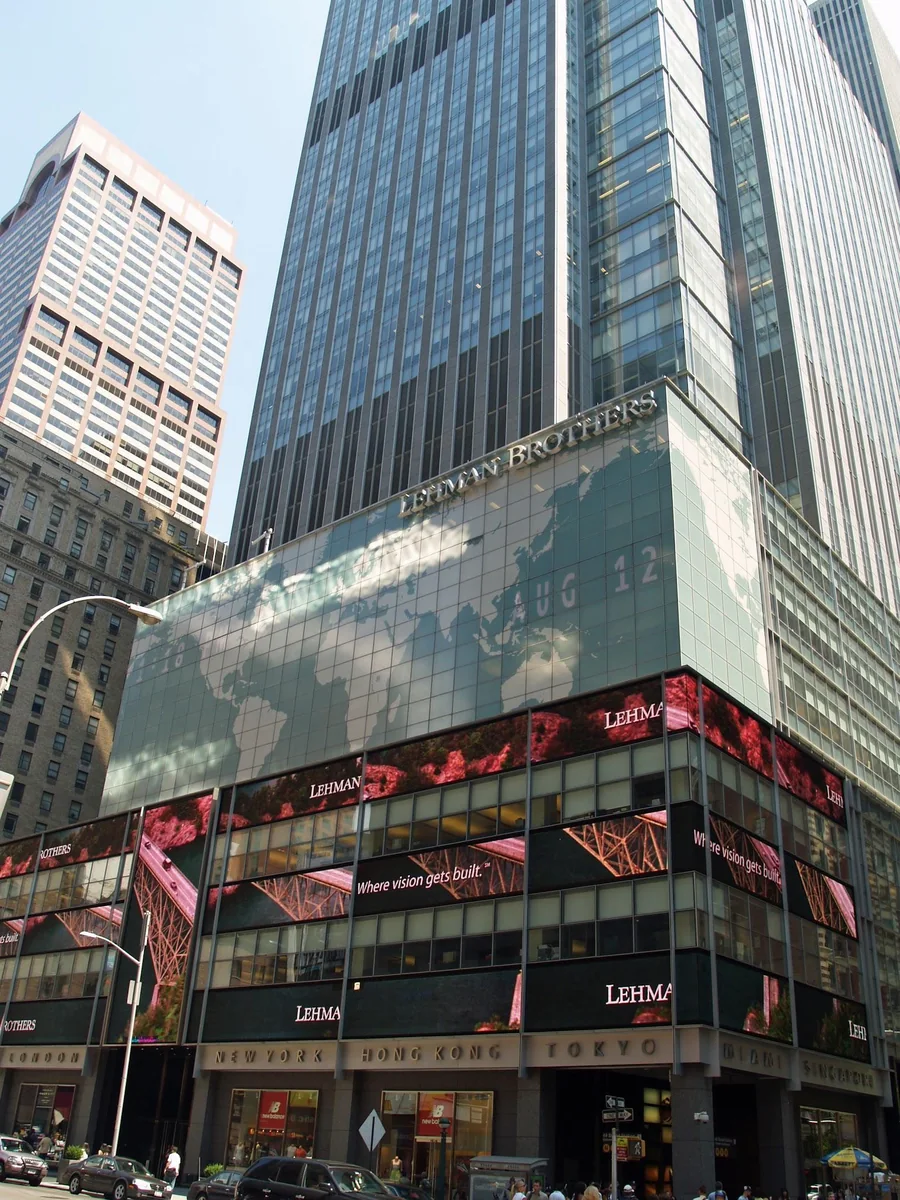
In September 2008, the global financial system came closer to collapse than at any time since the 1930s. Banks that had stood for more than a century disappeared in a weekend, credit stopped flowing, and millions of people lost their jobs and homes. The crisis reshaped banking rules and economic policy for a generation.
The Housing Bubble
The crisis began in the U.S. housing market. In the early 2000s, low interest rates and the belief that home prices always rise fueled a boom. Lenders loosened their standards and issued subprime mortgages to borrowers with weak credit, often with low introductory rates that later reset much higher. Lenders had little reason to be careful, because they did not keep the loans. They sold them to Wall Street firms, which bundled thousands of mortgages into securities and sold those to investors worldwide. Rating agencies gave many of these securities top grades.
How the Risk Spread
When home prices began to fall in 2006 and 2007, borrowers could no longer refinance or sell, and defaults climbed. Securities built on those mortgages lost value quickly, and because they had been sliced, repackaged, and sold many times over, nobody could be sure who held the losses. Banks had financed their holdings with large amounts of short-term borrowing. Insurance-like contracts called credit default swaps tied institutions together, so the failure of one threatened many others. Trust between banks evaporated, and they stopped lending to each other.
The Panic of 2008
The investment bank Bear Stearns was sold in a rescue deal in March 2008. On September 15, Lehman Brothers filed for bankruptcy, the largest in U.S. history. Within days the government took over the insurer AIG, and a money market fund fell below its $1 share price, prompting a run on funds once regarded as safe as cash. Congress approved a $700 billion rescue program known as TARP to stabilize banks. The Federal Reserve cut interest rates to nearly zero and began buying bonds on a massive scale.
The Aftermath
The damage spread far beyond Wall Street. The resulting downturn, known as the Great Recession, was the deepest in decades. U.S. unemployment reached 10% in October 2009, stock markets lost more than half their value from their peak, and millions of families lost homes to foreclosure. In 2010, Congress passed the Dodd-Frank Act, which required banks to hold more capital, created a consumer financial protection agency, and introduced regular stress tests for large institutions. Public anger over bailouts for banks, alongside hardship for ordinary households, influenced politics for years afterward.
Conclusion
The 2008 crisis was the result of cheap credit, weak lending standards, complex financial products, and too much borrowing, all resting on the assumption that housing prices would keep rising. Its central lesson is that risk in a connected financial system does not disappear when it is passed along. It can build up out of sight until confidence breaks, and then it affects everyone.