Everything that lives, at some point ages—bacteria, plants, animals—and humans are no exception. The biological basis of this universal phenomenon, however, is anything but simple, and many researchers have been trying to fully understand and control it for decades. Why do cells divide and die, and, more importantly, how can this process be slowed down or even partially reversed? Scientists that study human aging have found numerous biological mechanisms that are directly responsible for it—from telomere shortening to cellular senescence and mitochondrial decay, which make cells malfunction and age. However, despite being detrimental to an organism, being a major factor in organismic aging, cellular senescence has its benefits—chief among them being the prevention of tumorigenesis. Mitochondria, the power plants of cells, generate energy in the form of ATP, but the byproduct of this reaction, the unstable O2 ion, seeks to stabilize itself by stealing an electron from another molecule, thus leaving it damaged. This atom is considered to be one of the main drivers of the aging process because it interferes with the normal functioning of proteins, DNA, and lipids, damaging them in the process. This is why antioxidants, molecules that neutralize free radicals, have such a prominent role in healthy and long living—the damage that they prevent can be catastrophic. Cells have a sophisticated set of mechanisms to deal with free radicals and other DNA-damaging chemicals, but they become less and less efficient with time.
Genetics and the Regulation of Aging
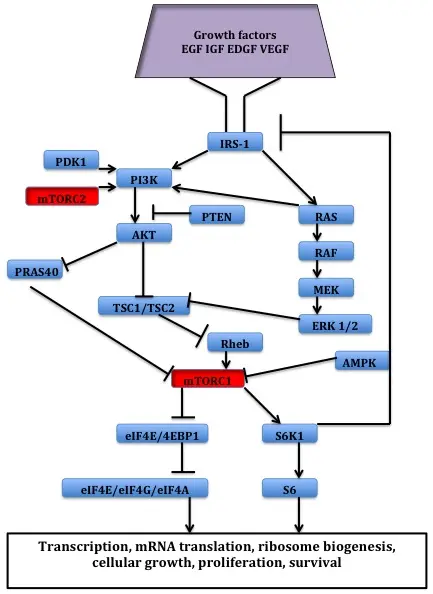
The research conducted in worms, insects, and rodents over the past several decades has identified a number of genetic mechanisms that regulate aging in these organisms and, therefore, are likely to be involved in human biology as well. Sirtuin genes, in particular, and the mTOR pathway, encode enzymes that are responsible for DNA repair mechanisms, and play a significant role in the aging process. In particular, suppressing the mTOR pathway has shown to greatly increase the healthspan of an organism, and there is reason to believe that the same mechanisms are responsible for human aging. Notably, the inhabitants of longevity islands have been shown to employ certain genetic and physiological tactics to reduce mTOR activity—fasting, which they do regularly, and a diet rich in antioxidants contribute significantly to their health.
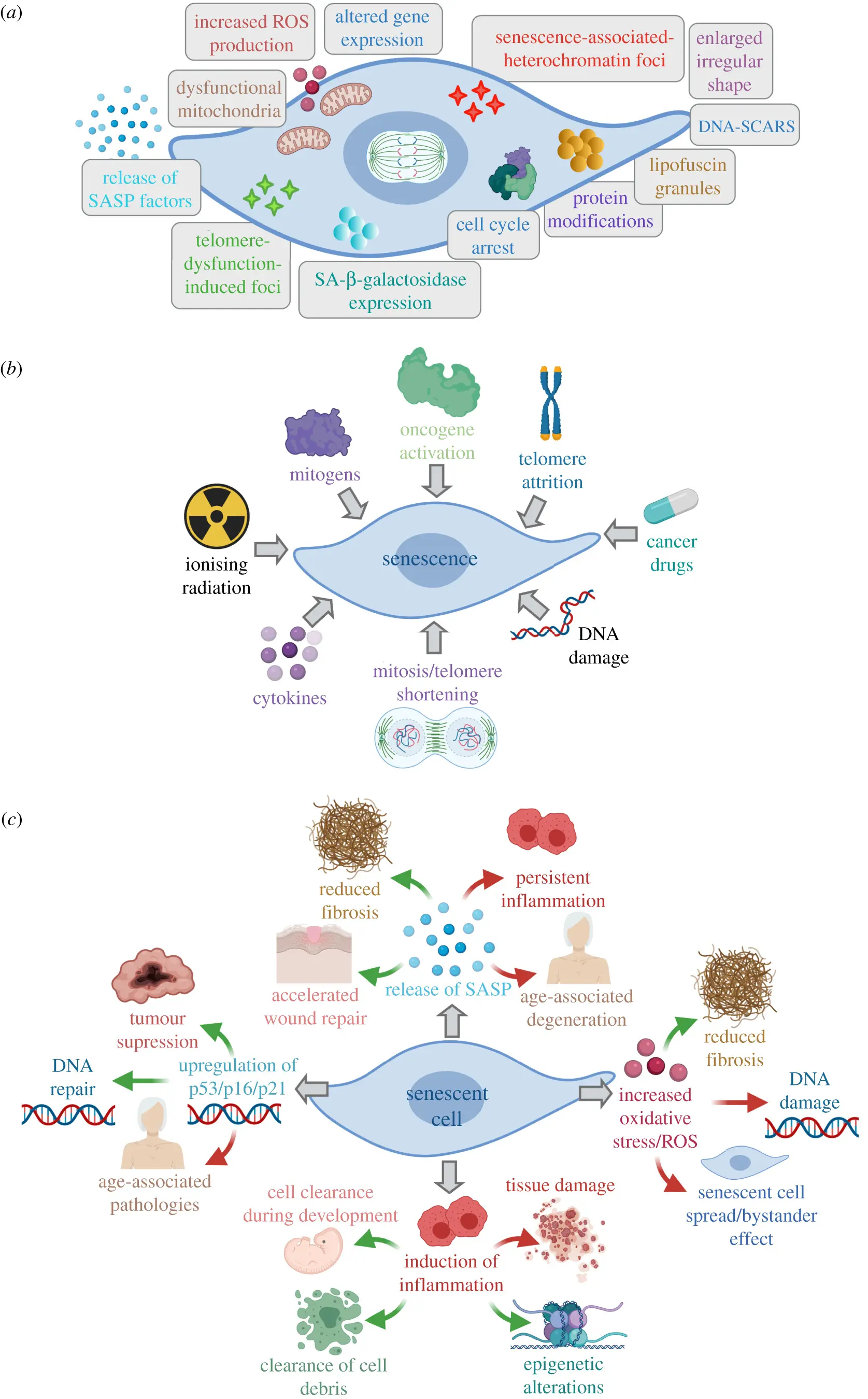
The other genetic mechanism that plays a part in human aging is hidden in telomeres, the endings of chromosomes that shorten every time the cell divides until the cell dies. The reason for cellular senescence has been theorized to be the shortening of telomeres—with every division of a cell, its telomeres become shorter until there are no more left; the cell then stops dividing and functioning, eventually dying. As mentioned above, cellular aging is closely linked with organismic aging—the two processes are nearly mutually dependent. While it plays a large part in healthy aging, cellular senescence has its own weaknesses that manifest later in life—when telomeres become too short, the cell can no longer divide, which negatively affects the organism. The only way to deal with dysfunctional senescent cells is to get rid of them via programmed cell death. Cellular senescence is also thought to interfere with tumorigenesis, preventing cancerous cells from dividing and spreading throughout the body.
Potential Interventions in Human Aging
In spite of humanity's inevitable end, scientists have made a number of interesting discoveries over the years that have brought them closer to intervening in the human aging process. In particular, recent advancements in selectively removing senescent cells from organisms have allowed researchers to test what effect they have on organismic aging. The results of the experiments held on mice have shown that eliminating all senescent cells from the body could drastically reduce the signs of aging in mice, as well as increase their healthspan and overall lifespan—experiments on humans are set to start soon.
One of the most promising ways to combat cellular senescence and, therefore, human aging is epigenetics—in particular, studying chromatin modification has allowed scientists to identify the genetic mechanism that causes cellular aging and realize that it can be partially reversed. If further research confirms these preliminary findings, this discovery may prove to be an end to human aging—being able to modify chromatin opens up endless opportunities for geneticists, allowing them to experiment with gene expressions. In particular, manipulating gene expression may prove to be an effective way to indefinitely postpone cellular senescence and human aging in general—it could allow scientists to identify the specific modifications that cause cells to age. In particular, preliminary tests that used gene editing to restore young cells have shown to be effective.
Aging, Health, and Human Longevity
It is no surprise to anyone that has studied human aging, or that has spent years researching it, that controlled longevity is not the ultimate goal—while being able to live longer would be beneficial, most researchers that study the mechanisms of human aging believe that the healthspan is much more important. In particular, an aging organism is much more susceptible to age-related diseases, and the arsenal of potential interventions detailed above in the article could, theoretically, prevent most of them, rendering them extinct. However, such a drastic increase in quality of life would raise questions in economics—the current capitalist system is not equipped to handle such a paradigm shift, and a sudden change in the general health and longevity of the global population will most likely result in its crash—it would require a more sophisticated economic structure to exist, which would take years to develop over the course of several decades.
Perhaps, in the far distant future, humans will find themselves in a completely different environment, one that is prepared to handle an increasingly healthy and long-living population. Perhaps, in a few decades or centuries, the way human aging is perceived will change forever.