Critical Writing
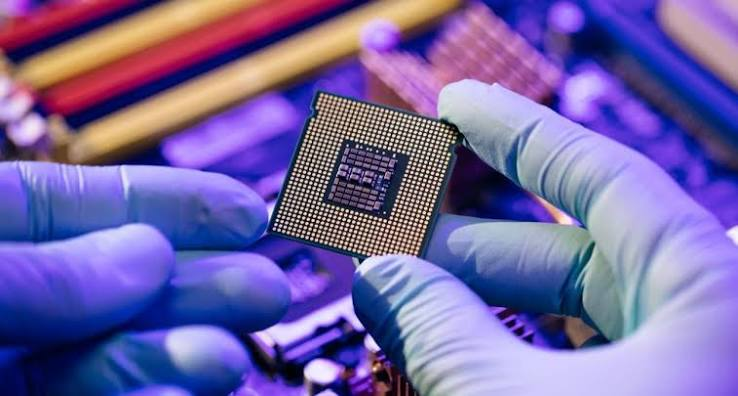
Although a processor may appear monolithic and integrated, its design may include various distinct chips. Known as chiplets, these smaller components provide a certain level of modularity and serve to demonstrate the relative importance of interconnects in the overall architecture.
Intel’s definition of chiplets focuses on the use of advanced packaging solutions to combine several pieces of silicon into a single computer component. On the page about cutting-edge process technologies for the data center, the company notes that the components are defined by their ability to combine other elements through side-by-side or stacked packaging.
Depending on the architecture, chiplets can be produced as separate elements with similar functionality or designed to perform distinctly. Intel’s page offers an example of integrated circuits combining elements with computational and memory functions. Through the use of advanced packaging, manufacturers create complexes of components in a single chip.
The company cites the advantage of such a solution in the ability to combine elements with different process technologies. A single complex allows for the use of different manufacturing processes for several elements. Intel notes that the solution allows for mixed-criticality systems, which is particularly important for aerospace and automotive applications. It further compares the creation of such a complex to a group of people attempting to assemble a product.
In the same way, a team of specialists seeking to build a structure from separate modules would have the option to use differing approaches for specific elements. While this analogy makes the concept of chiplets more understandable, it is necessary to emphasize that the assembly of computer components requires a much more complex interaction.
Intel’s page highlights several technologies it utilizes to establish high-bandwidth connections between components. In the document, it notes the presence of both direct connections, established through stacked construction, and interposers, which serve as bridges between elements. In essence, the technology allows to build complexes of components, which are then combined into a single device. It may be argued that the overall solution is more important than any of its parts. In the same way that a complex of interconnected elements cannot exist without establishing a connection between its parts, a chip with multiple components enables a new level of performance but requires precision to operate correctly.
Ultimately, chiplets enable a modular approach to the creation of computer components and processors. Their importance is found in their ability to provide flexibility to manufacturers and the use of advanced packaging technologies. The evolution of the technology will be essential
for the production of more powerful computers and will influence the development of new solutions in the future.
Reference
Intel. “ Cutting-Edge Process Technologies for Data Center .” Intel, Web.