
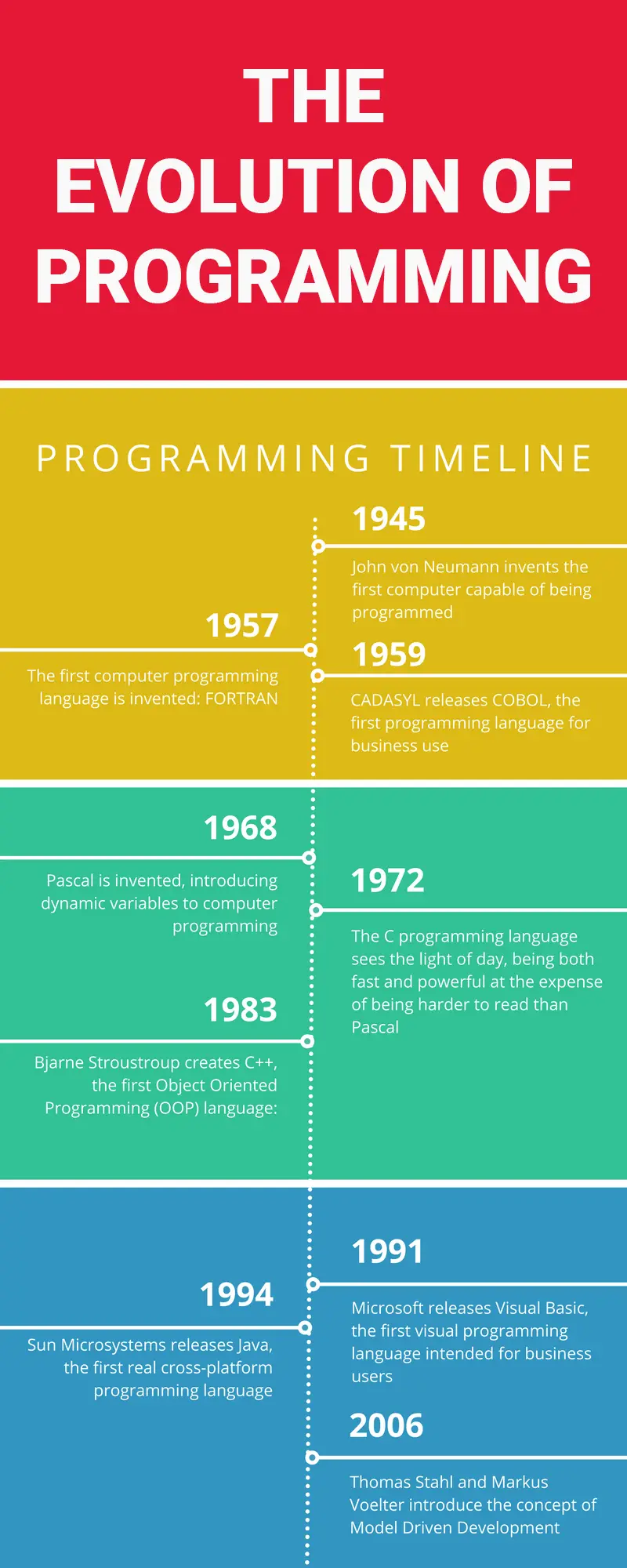
The history of coding languages is a truly fascinating process that lasted for decades and produced thousands of various languages. Throughout its evolution, the coding languages were used for various purposes and were refined to be more convenient and less time- and effort-consuming. Some of the first coding languages, like assembly, used symbolic notations that still relied on the computer's hardware. More modern developments of the language require less hardware knowledge and allow the person coding to focus on the process itself. The evolution of coding languages is directly linked with the technological progress and changing demands of the market and society.
The most recent changes to coding languages focus on achieving greater simplicity and versatility, as well as provide developers with more opportunities. Modern languages such as C, Java, Python, JavaScript aim to offer broad applications and easy learning curves. The introduction of Assembly, C, and high-level programming languages removed the need for people to understand how the computer works on a lower level. A variety of Integrated Development Environments aimed to make the task of coding less tedious, as well as the appearance of different software development frameworks and domain-specific languages focuses on specific areas of use. The future of coding languages is closely linked to the spread and development of artificial intelligence and machine learning: they allow programs to accomplish more and be useful in broader applications.