
Almost all, if not everyone, has at some point in their life experienced procrastination; whether you are someone who tends to wait till the very last minute to study for a test or someone who always seems to procrastinate on their projects, procrastination is something that almost all of us as students are familiar with. It can often be difficult to understand why we procrastinate and do not do our work as soon as we should and the psychology behind this is actually rather fascinating.
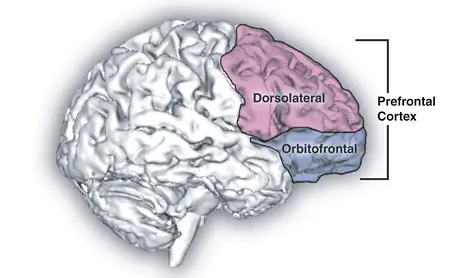
Procrastination is less of a time management problem and more of a psychological issue as procrastinating causes us to fall into a state where our limbic system, the seat of emotional processing, overpowers our prefrontal cortex, the seat of planning, causing us to seek out smaller, short term gains rather than long term rewards such as success in our education amongst other things.
The Science Behind the Procrastination
When we procrastinate, the stress that this causes us can often lead to us producing higher levels of cortisol, a hormone associated with stress. Students can actually become addicted to the stress caused by procrastination to manage their own stress, but the stress can also serve as a motivator for students who procrastinate as they work up towards a deadline, motivating them to do their work very efficiently right before a deadline with little time to spare. For these people, however, this is not a sustainable habit.
Scientists have also found procrastination to be related to dopamine, the feel-good hormone in the human body, as we often associate the procrastination of work with dopamine surges.

The Science Of the Feelings Behind Procrastination
Procrastination can often be fuelled by the thoughts, and more specifically, emotions that we associate with a task that we are putting off, and these emotions are often very unpleasant such as fear. When we procrastinate, what we are essentially doing is substituting these unpleasant emotions with others such as anxiety. A better alternative is to replace the emotions associated with your task, although more difficult, is to actually replace the thoughts associated with negative emotions with thoughts that cause us to feel happy about doing the tasks that we put off instead. Procrastination can often be used as a coping mechanism for dealing with the stress that we face, causing us to put off tasks that seem stressful.
A good way to combat this is by reframing, which is essentially changing the way you think about a given set of circumstances in order to change your mindset to be more receptive to working on the task at hand, rather than putting it off.
This is very useful in all manner of tasks, as it can actually turn the most difficult of tasks into a breeze.
Methods Of Combatting Procrastination

There are actually many methods which can be employed to combat the time consuming and destructive monster that is procrastination. One good method to start working on something when you are overcome with the sheer wave of negative emotions that come with procrastination is to tell yourself that you will do the task for a mere two minutes. In most cases, you will actually find it much easier to keep working on the task after the two minutes due to the negative emotions you were feeling simply vanishing. Scientists have also found that temptation bundling, which involves associating something you like with something you need to do, is also an effective way to combat procrastination. These are just some of the many methods that can be employed to help you to overcome your procrastination and reduce your stress with it.
Another way to help reduce stress and combat the feelings that come with procrastination is to utilise your time wisely and make sure that your environment is suitable for working on the task at hand. You can do this by making time frames for tasks and making sure that you have enough space to work, as well as making sure you get sufficient rest in your sleep. The more you engage and strengthen your prefrontal cortex, the stronger you will be against procrastination and help it become much easier to beat. Keeping a planner or a to-do list can also help strengthen your mindset and reinforce positive thoughts to take you further along on your path to beating procrastination, whilst also creating boundaries that can prevent you from procrastinating by encouraging studying in an isolated area.
Conclusion
Procrastination can be a pretty frightening prospect for a lot of students at many levels, but understanding it, as well as the effects it has on us, can be rather beneficial in dealing with it. By employing some of these small changes, you can actually help yourself tremendously in terms of dealing with what seems to be an impossible task as you only have to make that first step, one step at a time. It is important to understand that negative reinforcement and negative emotions only bring you down in terms of procrastination and that positivity and kindness are the real keys to beating procrastination.