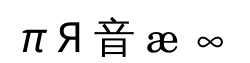
Unicode: The Shared Numbering System Behind Digital Text
Why can a message contain English, Arabic, and an emoji without requiring three separate programs? Digital text depends on rules that identify characters consistently. Unicode supplies a shared foundation for those rules. Understanding it helps explain why a text file is more than a collection of shapes that happen to look correct on one screen.
Characters Need Consistent Identities
The Unicode Consortium explains that Unicode assigns characters unique numbers independent of the platform, program, or language. Earlier encoding systems could assign the same number to different characters, or require incompatible systems for different languages. A common system helps software exchange text without those conflicts.
Consider a school collecting names in several writing systems. If the form, database, and exported file disagree about the characters being stored, a name may change when it moves between them. Unicode provides a shared basis for representing the text throughout that process.
This hypothetical example also illustrates why language support belongs in the design of a system. A field that accepts only a limited selection of characters may fail to represent the people using it, even if its interface appears convenient to its designers.
Unicode and UTF-8 Are Related
The Consortium's encoding FAQ explains that UTF-8, UTF-16, and UTF-32 are encoding forms for Unicode. They represent its code points with different arrangements of code units. UTF-8 is byte-oriented and can use different numbers of bytes for different characters.
The distinction is useful: identifying a character and choosing how to encode it are connected tasks, but they are not the same task. When a file is read using the wrong encoding, its bytes can be interpreted incorrectly even though the original author entered the intended text.
A student who sees strange symbols after importing a file should therefore consider how the text was encoded and decoded. Retyping everything may hide the immediate symptom while leaving the underlying exchange problem unresolved.
Representation and Appearance
A common character system does not automatically settle how every character will look in a particular font or layout. A project still needs to check the text as readers will see it. The shared numbers provide a foundation, while the interface must use that foundation correctly.
For the school form, a useful test would carry sample names through entry, saving, export, and reimport. The goal would be to preserve the text through the entire workflow, rather than accepting a successful first display as sufficient evidence.
Summary
Unicode gives digital text a common character identity across languages and platforms. Encoding forms such as UTF-8 describe how that identity is stored as data. Together, these ideas make text exchange more dependable, but developers must still preserve the encoding and test how their systems handle the people and languages they serve.
Works Cited
Unicode Consortium. “What Is Unicode?.” n.d. Accessed 10 Oct. 2026.
Unicode Consortium. “FAQ: UTF-8, UTF-16, UTF-32 and BOM.” n.d. Accessed 10 Oct. 2026.
БудетЛучше. “Unicode sample.” Wikimedia Commons, 25 September 2025. Image. CC0. Accessed 10 Oct. 2026.
A sample of characters represented by Unicode. Image: БудетЛучше; CC0.