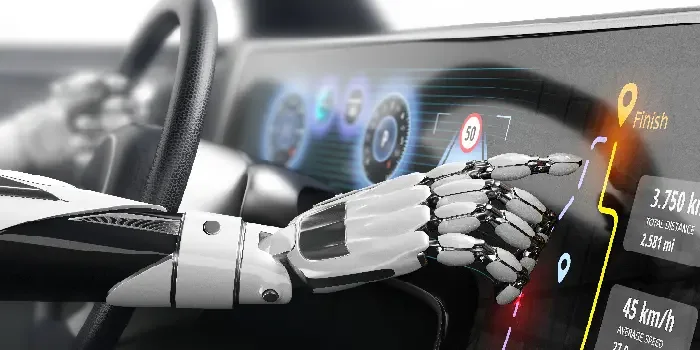
The proliferation of agentic AI systems, autonomous physical robotics, and generative multimodal models represent the latest iteration of one of the oldest debates in modern economics: namely, whether the process of technological automation will result in a net loss or gain of human labor opportunities. Unlike in the past, where industrial automation was focused on reducing the need for physical labor, the current push towards autonomy touches on high-wage cognitive spheres, complex decision-making pipelines, and physical dexterity simultaneously.
Economists and policy strategists are at odds with one another, debating whether the shift represents an updated version of "creative destruction"—a process where the job losses are temporary, but the jobs gained are more desirable in terms of skillset and compensation—or a fundamental change in the nature of labor, resulting in permanent structural unemployment and a decreased labor share of national income.
1. The Discarded Assumptions: Cognitive Automation vs. Historical Mechanization
The old assumptions about automation are based on prior occurrences of mechanization, which usually only impacted either repetitive physical labor or the repetitive aspects of intellectual work. The emerging frontier of AI represents several fundamental changes to the system, which may impact the way we perceive the relationship between technology and labor:
Cognitive and Analytical Saturation: Unlike earlier technologies, which functioned as an aide to higher intellectual workers while replacing lower-skilled ones, large-scale models begin to challenge the capabilities of high-skill cognitive work, reducing the time required to perform certain tasks by several orders of magnitude.
Velocity of Deployment: Unlike industrial equipment, which required substantial time and investment to deploy, algorithms that run on generic hardware and are delivered as software can scale to any market in a matter of hours, removing the ability for economies to adapt to changes in an orderly manner.
Decrement of Comparative Advantage: Proponents of automation as a force that lowers overall employment rarely factor in the change in comparative advantage as an alternative driver. If AI systems begin to challenge both physical and cognitive spheres, the ability of humans to produce goods with less capital than machines will drop across all sectors.
2. Productivity Spillovers & The "Labor Re-instatement" Hypothesis
Supporters of the idea that autonomous systems are a means of increasing overall productivity are quick to point out the ways in which machines can act as a catalyst to unlock hyper-productive economic activity that would have been impossible without them:
Unlocking Hyper-Productivity: By replacing various aspects of administration and analytical thought with faster, more efficient digital alternatives, the economy can focus human creativity and effort on high-reward activities, which would propel overall GDP upwards while decreasing the cost of entry-level goods and services.
The Re-instatement Effect: As described in modern labor economics literature (Acemoglu & Restrepo, task frameworks), the act of computerization rarely replaces entire industries, but rather removes the need for certain lower-skill segments of labor while creating demand for higher-skill segments. This trend has been observed throughout the history of information technology development and appears to be accelerated in the case of autonomous systems.
Democratization of Specialized Expertise: The emergence of generative and autonomous tools represents an opportunity to increase the productivity of lower- and middle-class labor by supplementing their work with the abilities of an expert-level generalist, thus improving the overall productivity of the economy.
3. Structural Risks: Wage Polarization, Capital Concentration, & Friction
On the other hand, economic literature has repeatedly demonstrated that automation can have a number of deleterious structural effects on the labor market, which rarely manifest immediately after adoption but rather over the course of several years:
Decoupling of Capital and Labor Share: If the process of capitalization becomes increasingly automated, the distribution of income between labor and capital will see a significant redistribution towards the latter, reducing the overall compensation of human workers.
Skill Mismatch & Frictional Unemployment: While proponents of automation rarely consider the possibility of increased structural unemployment, it is a well-documented phenomenon that the skills required by new job opportunities often cannot be acquired rapidly by the workers who would have otherwise occupied these positions.
Middle-Tier Compression: As the economy moves towards greater capitalization, the middle class of comfortable, middle-skill labor who do not require extensive training while still enjoying stable income is at risk of disappearing, as industries will be split between low-skill physical services and high-skill cognitive administration.
4. Policy Frameworks & Macroeconomic Adaptation Strategies
In the race to capture the vast productivity gains represented by the adoption of autonomous systems, policymakers are considering a number of economic safeguards that may protect vulnerable segments of the labor market from being permanently displaced:
Universal Basic Dividends & Capital-Sharing Mechanisms: One potential approach to capital sharing, suggested by several scholars, is the possibility of funding national wealth funds with technology-specific taxes, which would provide an income to all citizens irrespective of their involvement with new technologies.
Lifelong Re-skilling & Continuous Education Frameworks: Transforming the state-dominated education industry into a continuous, subsidized process rather than a one-time degree acquisition represents an opportunity to ensure that labor market participants can meet the needs of the new economy.
Tax Code Neutrality: Removing pro-capital policy advantages (such as differential taxation of automation versus human labor) will ensure that businesses do not have an artificial economic incentive to replace employees with technologies.
Sources
- LXT. (n.d.). Robotic hand interacting with an autonomous vehicle touchscreen dashboard interface [Digital graphic]. LXT AI Glossary. https://www.lxt.ai/ai-glossary/autonomous-systems/