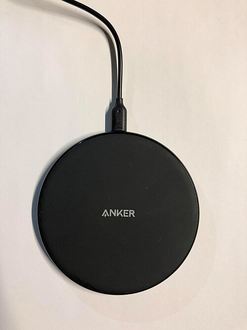
Placing a device on a charging pad can feel like removing the connection entirely. In reality, the connection has changed form. Wireless charging uses an electromagnetic arrangement to transfer energy across a gap, followed by circuitry that turns the received energy into usable electrical power. The absence of a plug does not remove the need for coordination between the charger and the device.
Two Coils and a Changing Field
The Wireless Power Consortium explains Qi charging through magnetic induction. An alternating current in a transmitter coil produces a magnetic field, which induces a voltage in a receiver coil. The received voltage can power a device or charge its battery.
The same explanation emphasizes that coils alone are insufficient. The receiving device sends control information to the charging station, including information needed to stop power transfer when appropriate. The charger and receiver therefore participate in a controlled system.
A classroom analogy is passing energy across a short space while exchanging instructions about how much is needed. The analogy is incomplete, but it highlights an essential point: transferring power and managing that transfer are both part of charging.
Compatibility Needs Evidence
The Consortium's certification guidance says Qi-certified products undergo independent laboratory testing for safety, interoperability, and energy efficiency. It also distinguishes certification from looser claims such as being compatible with a standard. Its product database provides a way to check the identity of a certified product.
This is useful because the word wireless describes the transfer method without establishing how well two particular products work together. The intended receiver, transmitter, and operating conditions still matter.
Imagine a community center installing shared charging stations. Its staff would need to know which devices can use them and whether the selected products have the relevant tested capabilities. A successful trial with one device would not be enough to explain the experience of every visitor.
Convenience Is an Operating Question
For the center, the value of the system would include how easily visitors position their devices and recognize that charging has started. A device resting on a pad can look ready even if the user has not confirmed the charging state.
That hypothetical situation suggests a useful test: observe the complete interaction, from placement to confirmation and removal. The technical mechanism may work, while unclear feedback still produces a frustrating experience.
It would also be sensible to compare the actual charging task with the center's needs. A convenient shared station and a device that requires continuous power have different operating expectations.
Summary
Wireless charging replaces a direct electrical connector with a controlled transfer between transmitter and receiver coils. Its usefulness depends on compatible equipment, tested performance, and feedback that makes the charging state understandable. The technology succeeds when the physical convenience of a charging pad is supported by a dependable transfer of energy.
Works Cited
Wireless Power Consortium. “How Qi Works.” n.d. Accessed 10 Oct. 2026.
Wireless Power Consortium. “Qi Certified Products.” n.d. Accessed 10 Oct. 2026.
Seawhelan. “Wireless Charging Pad 2018.” Wikimedia Commons, 8 April 2018. Image. CC BY-SA 4.0. Accessed 10 Oct. 2026.
A Qi wireless charging pad. Image: Seawhelan; CC BY-SA 4.0.