
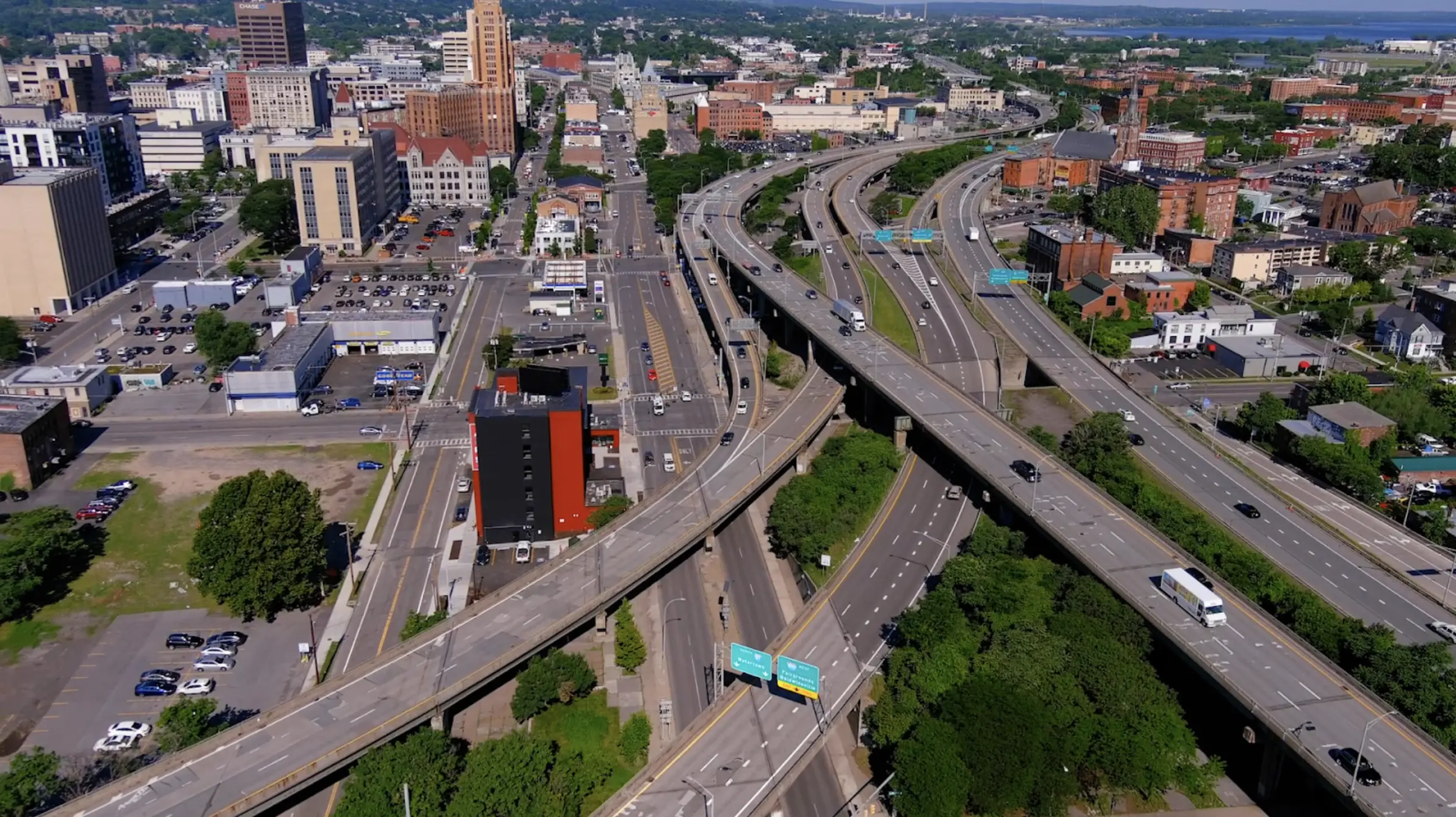
Highways litter the landscape of any given American city, but few can rival the legacy of Interstate 81 and the division it has caused in the residents of Syracuse, New York. Decades ago, this highway cut through the city, fragmenting neighborhoods and forcing thousands of residents to relocate. Since then, the highway has continued to separate the community, restricting access to jobs, education, recreation, and healthcare facilities.
Not only is this city far from being an outlier in terms of divisive highway infrastructure, but residents also deal with the legacy of other highway systems built throughout America in the last century. These thoroughfares carved through low-income and minority neighborhoods, creating lasting socioeconomic divisions.
Decades later, residents of Syracuse still live with the consequences of the highway cutting through their community, isolating it from the amenities and opportunities that make for a livable city. While the highway created barriers to basic comforts, emissions from the traffic resulted in environmental hazards. The area suffers from increased traffic congestion, impeding the free movement of residents from one part of the city to another. It has also affected the economic development and investment in the region, leaving many families in poverty.
Nevertheless, with its current state of disrepair, the city has an opportunity to reclaim a portion of its original "identity" and reshape its future for the better. The current I-81 viaduct will require extensive reconstruction, allowing officials to redesign the road system. Community members and officials hope to replace the highway infrastructure with a local street grid, reconnecting previously isolated neighborhoods.
Proponents of the plan believe that the removal of the viaduct will yield several advantages to the local community beyond architectural aesthetics. The proposed redesign aims to reduce smog, improve safety, ease congestion, and promote economic development. By removing the highway from the city, planners anticipate opening the door to investment and the establishment of new businesses, all of which have been inaccessible to residents due to the highway's presence. Besides the benefits to the local economy, the removal of the highway will help reduce the environmental impact that the traffic has had on the community.
Despite the potential benefits, residents have expressed concerns about the impact of eliminating the highway. Among the many apprehensions, community members have questioned the sources of funding for the project. The highway's removal is also expected to cause traffic challenges within the city, which has prompted some residents to oppose the plan. Nevertheless, the proponents have demonstrated that such projects could be viable by highlighting similar highway removal projects in San Francisco, Milwaukee, and Seoul, South Korea, as successful examples.
While this article focuses on the benefits that the removal of the I-81 viaduct will bring to residents, it is also meant to touch on the historical context and negative impact that highways have had on minority communities. Decades ago, many highway systems were built in low-income minority neighborhoods, where residents lacked the resources to challenge the developments. Such an initiative created significant barriers to residents' lives, including challenges in accessing services and dealing with the environmental impact resulting from the highway's construction.
The experience of Syracuse serves as a lesson in reconnecting neighborhoods and restoring the quality of life of its residents. It offers insight into the challenges that cities face when dealing with legacy infrastructure that requires upgrades. Through this initiative, urban planners around the country are working to address the legacy of divisive infrastructure that has disconnected and impeded the growth of many communities for decades.