

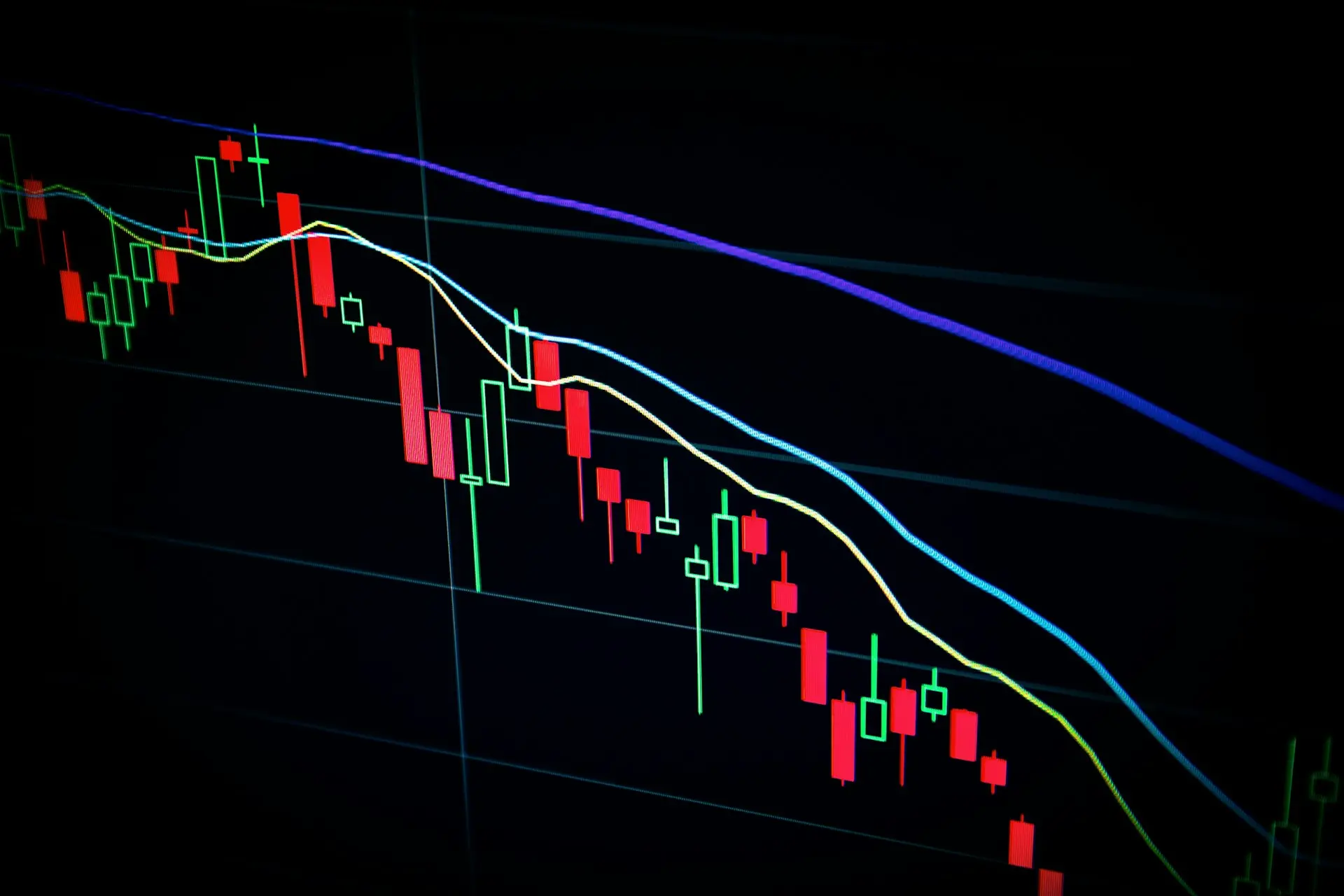
November 2024 was marked by the volatility of the price of Brent oil which fluctuated between $83 and $95 per barrel during several weeks due to uncertainty in the global energy market. The Organization of Petroleum Exporting Countries Plus, represented by Saudi Arabia and Russia, agreed on extending production cut-offs until June 2025 in order to stabilize the prices due to slowing demand. On the other hand, Western countries have stepped up their energy transition initiatives, spending hundreds of billions on renewable energy and electric cars. The situation is one of contradiction and uncertainty in the global energy market.
The oil sector, characterized by its cyclic development, is now faced with new paradigm. Not only there is a need to focus on supply and demand but also on a combination of climate policy, capital allocation and geopolitical strategy.
Approach of OPEC+: Control through Scarcity
OPEC+ started 2024 facing challenges. The decline in demand for oil from Europe and China, along with increased production from the United States, brought oil prices down to $70 per barrel during spring. In order to protect their income, the organization continued cutting back its output voluntarily by 2.2 million barrels per day (bpd) into 2025. Saudi Arabia contributed the most towards the reduction, reducing its own production by 1 million bpd. At the same time, Russia was reducing its exports by 500 thousand bpd under the sanctions regime.
The mentioned reductions reflected the new approach of OPEC+. By maintaining oil production low, the organization tried to keep oil prices on a stable level of about $85 per barrel. However, the discipline showed itself to be inconsistent. While smaller countries like Nigeria and Iraq had problems with meeting their targets, Russia reduced its prices for Asian buyers.
The Demand Side: Transition Amidst Uncertainty
Worldwide oil demand reached a peak of more than 103 million barrels per day in 2024, beyond which forecast scenarios become dramatically different. According to the International Energy Agency (IEA), oil demand will stabilize by the end of the 2020s, whereas OPEC is convinced that it will continue to increase until well into the 2030s, spurred by developing countries. The reality might be somewhere in between: on one hand, efficiency improvements and the adoption of electric cars balance out the continued growth in petrochemicals and air travel.
China has been traditionally considered the world's greatest incremental consumer; today it represents the main uncertainty factor. With the slowdown of its GDP growth, it continues to increase capacity in its refineries, thus becoming an exporter of fuels. On the other hand, India's increasing transport demand and its industrialization compensate for weak spots elsewhere.
Energy Transition Pressure Points
Green transition adds an additional layer to the problem of the supply and demand equation. Western countries, which feel the pressure from climate targets, are limiting funding of fossil fuels while being dependent on oil for transportation and production. Leading European banks have tightened their credit conditions regarding upstream projects, forcing energy companies to depend more on government funding or private investments.
On the other hand, clean energy investment has topped $2 trillion in 2024, which is significantly higher than new fossil fuel investments. Subsidies for EV, hydrogen, and renewables still remain in effect in the U.S., EU, and Japan. Interestingly enough, such two-faced situation brings about temporary price volatility. Shortage can appear even when demand decreases.
Investor Behavior and the "Last Barrel" Riddle
Institutional investors now find themselves in the unique position of being rewarded and penalized at the same time by investments in oil. While energy stocks performed well compared to global indices in 2024, ESG issues are now influencing their portfolio decisions. Pension funds and sovereign wealth managers must meet opposite goals of maximizing profit in energy investments while increasing decarbonization efforts.
This dichotomy has sparked the ongoing discussion on the question of when and where the last profitable barrel of oil will be extracted. Major oil companies seek protection in massive investment in carbon-capturing technology, biofuels, and alternative sources of energy. At the same time, their profits continue to depend on crude.
Conclusion
The oil market for 2024-2025 contains paradox. Demand is at record levels, but demand going forward is set to fall. Prices are determined by an alternation of oversupply and shortage. The industry is moving toward change even as it exploits opportunities. The system is not collapsing; it is transforming.
The future will be shaped by cooperation: between producers and users, between conventional and alternative energies, between politicians and the market. If the world can make the transition in energy happen successfully, volatility will disappear. Otherwise, oil will serve as both a remnant of the old age and the engine of the new one.