
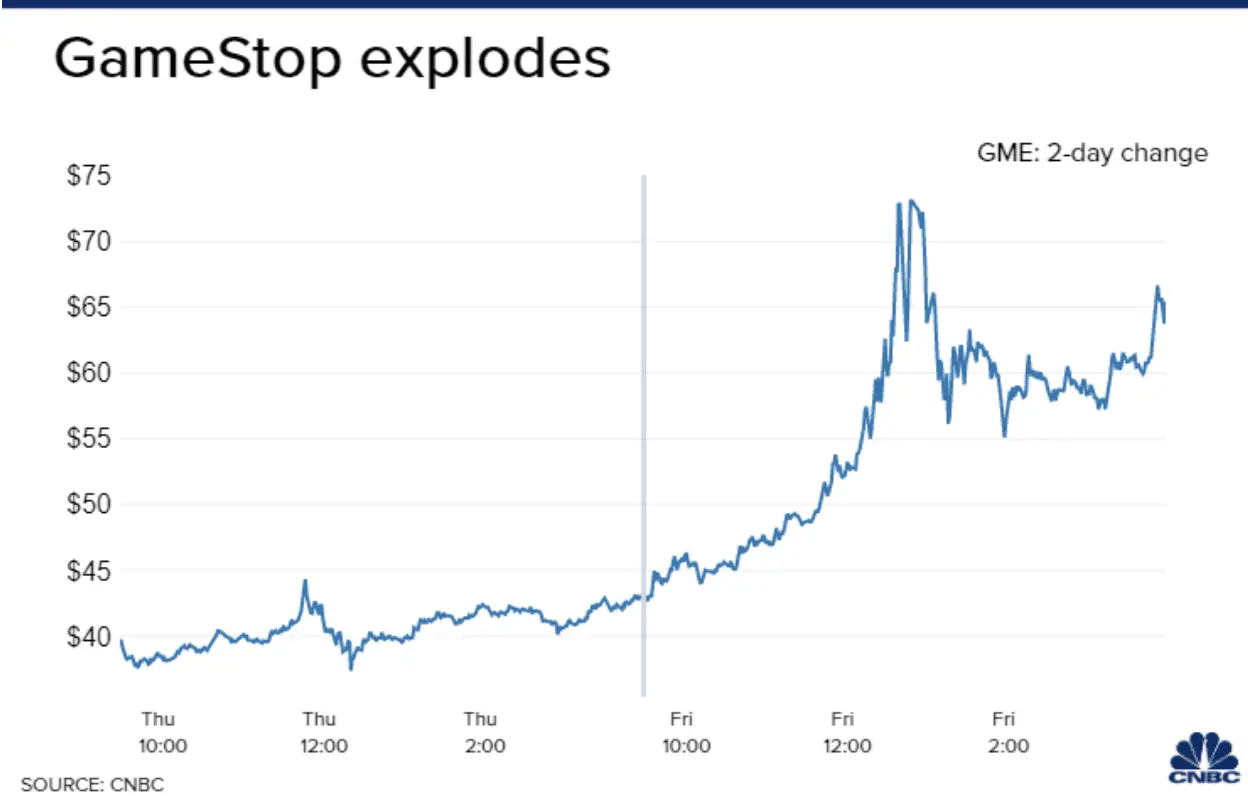
GameStop. Famously being the grimeiest store in a dead shopping mall, it became a center of scandal in 2021 when Wall Street investors were horrified seeing how their investment turned into ashes. But why? Why did an unknown company turn into the top news on the Wall Street Journal? It was because of an investment strategy called short-sell.
Short-selling is one of the widespread investment methods where the idea is the complete opposite of buying stocks. When you buy stocks in some company, your assumption is that the share prices will grow, meaning that you will earn some profit. In the case of short-selling, however, you bet on falling prices of the company. This can happen for whatever reason: maybe you predict a fall of oil industry shares after a left-wing president is elected; maybe you predict low sales of some company during the fiscal year. Whatever the reason, short-selling enables you to earn not only from companies' success but also from their fall.
The shorting process of stocks is quite complicated compared to conventional buying and selling. For example, let us consider that James expects the stock value of Chipotle to go down due to the exit of its CEO, Brian Niccol (considering the timing of the transaction is appropriate). James opts for shorting the stocks. He borrows the Chipotle stocks from Sally. Right after borrowing the stocks, James sells them in the open market. If his prediction proves right and the stock values fall, James is able to buy back the stocks at reduced prices and earn the difference as profit. In return, he pays Sally the stocks along with some interest that was pre-decided between both of them.
The technique has been used by experienced traders on Wall Street, targeting companies such as Gamestop. It was clear that the company was experiencing losses for a long time; hence many organizations decided to short the stock. However, the move came to the attention of a user of the r/wallstreetbets forum. He saw a way of using the trend by buying Gamestop stocks using Robinhood. The action led to a rise in the stock price. When there is a sudden increase in the stock price of a heavily shorted stock, a situation called a short squeeze occurs. Short squeeze happens when there is a rush by the holders of short positions to buy back the borrowed shares in order to avoid losses.
It creates a vicious cycle since the buying leads to a reduction in the number of shares.
Ultimately, the game was brought to a sudden stop by Robinhood's decision to prohibit trading of GME, which was met with strong disapproval from individual investors. The firm was accused of losing sight of its mission to promote equity in investing by giving in to the demands of the same Wall Street players they were disrupting. The public outcry against Robinhood is yet another problem for the company, as it tries to overcome its negative reputation.
Short selling involves a lot of risks and the Gamestop case shows it very well. Most new trading platforms have started limiting or completely prohibiting short-selling and other risky operations due to their dangerous nature, as it may result in huge losses. For new traders, it would be better not to go into short-selling right away, but to choose less risky options of investment. Shorting is a rare phenomenon, but it can turn out to be really destructive.