Finance & Economics
01Sovereign Debt Burdens and the Fiscal Limits of Advanced Economies
How persistent primary deficits, structural entitlement pressures, and r g interest rate dynamics are eroding fiscal space across G7 nations.
Read articleExplore every Policy Ledger article written by Krish Abhiram.
View all 481 articlesHow persistent primary deficits, structural entitlement pressures, and r g interest rate dynamics are eroding fiscal space across G7 nations.
Read articleHow financial weaponization, secondary sanctions, and new payment infrastructure will create a more fragmented monetary order
Read articleHow billions in AI capital expenditure have yet to translate into macro-level economic growth, and why the "Solow Paradox" is repeating itself in the generative AI era.
Read articleHow shrinking working-age populations, rising dependency ratios, and structural labor shortages are permanently altering the trajectory of global economic growth.
Read articleFor the last century, the concentration of resources and political-economic domination was dictated by the availability of hydrocarbons. Ensuring the continuous flow of the lifeblood of the world economy was the…
Read articleHow government subsidies, extreme capital intensity, and geopolitical re-shoring are testing the limits of non-market capital deployment.
Read articleThe rise of green industrial policies, semiconductor state aid, and the collapse of the multilateral trade regime have given rise to systemic economic fragmentation.
Read articleSovereign debt markets, including the most liquid U.S. Treasuries, UK Gilts, German Bunds, and Japanese Government Bonds (JGBs), serve as the critical foundation for the financial system. They provide the yield…
Read articleFor three decades, modern central banking was guided by one monetary policy regime, which has been uniformly adopted by the most influential monetary authorities, including the
Read articleHow institutional capital flows, borrower-based constraints, and macroprudential measures shape residential real estate.
Read articleHow architecture, privacy trade-offs, and the wholesale-retail divide, shape central bank liabilities and financial stability.
Read articleThe rise of non-bank financial intermediaries, opaque valuations, and direct ties to the bank system, explain how risks in credit have shifted into the shadows.
Read articleHow creditor fragmentation, non-Paris Club dominance, and the G20 Common Framework are redefining default resolution in developing economies
Read articleThe unwinding of huge asset purchase programs, known as quantitative tightening (QT), has had a significant impact on world liquidity. The task of tightening the central bank balance sheets is complicated by the need…
Read articleHow structural demographics, capital demand, and fiscal deficits are permanently increasing the natural rate of interest
Read articleHow geopolitical fragmentation, friend-shoring, and chronic volatility are taking the place of the era of cost-optimized globalization.
Read articleHow global subsidy wars + AI supercycle are reframing the geography of advanced chip manufacturing
Read articleIn just a few years, the dominance of the US dollar in the world has been challenged. The reason for this is the aggressive use of financial tools by the West, which has prompted many countries to turn to the…
Read articleHow multi-trillion dollar sovereign vehicles are fueling aggressive state-led capital to transform post-hydrocarbon economies.
Read articleHow surging load demand, aging transmission assets, and $1.3 tn in utility Capex are shaping the energy market.
Read articleHow $15.1 trillion in state capital is pivoting from passive portfolio management to controlling the physical backbone of AI and energy systems.
Read articleHow higher borrowing costs, grid queue delays and developing market risk premia threaten global decarbonization targets
Read article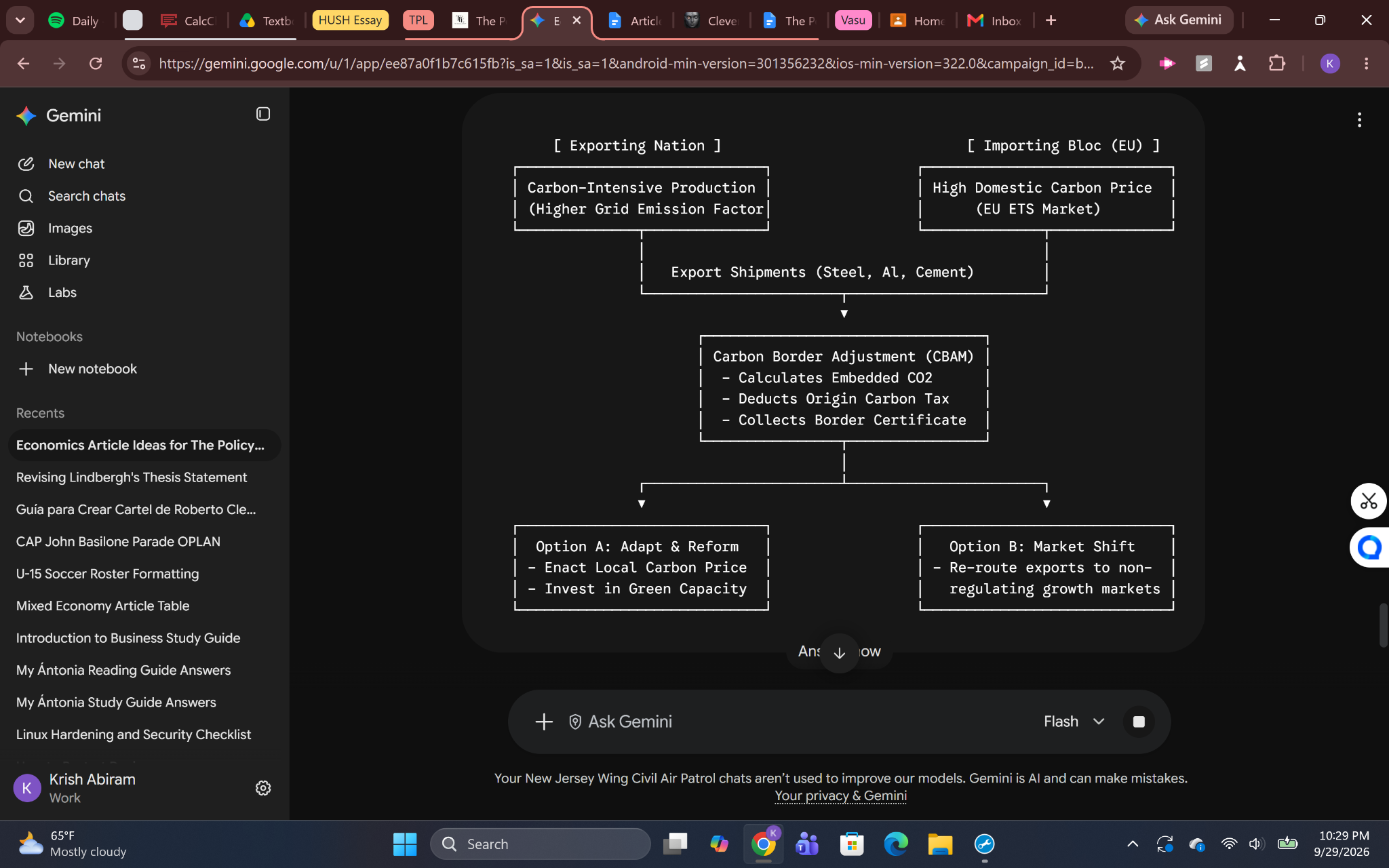
How green trade policy and carbon border taxes are reshaping export economics and deepening North-South economic friction.
Read articleWhile subsidies to favored industries are back in fashion, picking winners runs the risk of market distortions and subsidy wars.
Read articleComing to terms with the transition between the pandemic aftermath period and the new reality.
Read articleHow state-owned capital is shifting from oil and gas to climate tech and AI infrastructure.
Read articleHow the 2026 maturity wall and sector distress is reshaping municipal economies and regional banking
Read articleHow geopolitical tension, tariffs and automation are ending the era of hyper-globalization.
Read articleThe impact of high interest rates and refinancing cliffs on developing countries’ debt and fiscal sustainability.
Read articleThe Federal Reserves quantitative tightening (QT) program ran afoul of bank reserve requirements and short funding markets.
Read articleThe U.S. labor market entered 2026 with an unusual tightness, as an end to frenetic "Great Resignation"-era job-hopping failed to create the usual wave of layoffs in a slowing economy -- leaving both the labor market…
Read articleThe theoretical anchor of monetary policy is on the rise after waves of technological and fiscal change
Read articleRecent attempts by members of the executive to influence rate decisions pose a threat to the institutional safeguards around monetary policy
Read articleThe global economy in 2026 has settled into a happy medium most macroeconomists would describe as 'stagflation lite." Unlike the 70s, when double-digit inflation and stagnant economic growth squeezed a lot at once,…
Read article